


What Happens If Promotional Hats Arrive After the Event Date?
A shipment of promotional hats that arrives after the event date has usually lost its main purpose. The hats may still be usable for staff uniforms, follow-up gifts, online giveaways, future events, or retail stock, but they cannot deliver the planned on-site visibility, attendee engagement, or campaign timing. For time-sensitive promotions, late arrival is not simply a logistics inconvenience; it can turn a useful branded product into excess inventory.
The right response depends on how late the delivery will be, whether the event has related activities afterward, and whether the hats can be repurposed without weakening the campaign. More importantly, the situation should prompt a review of the ordering process: custom hat production, approval cycles, packing, international transport, and customs clearance all need realistic time allowances.
What is the practical impact of late promotional hats?
Promotional caps and hats are commonly ordered because they are visible, wearable, and easy to distribute. A baseball cap with an embroidered logo can be seen throughout a trade show, sports event, store opening, team activity, or product launch. That value is concentrated around a particular date. Once that date has passed, the commercial return often changes.
For an event organizer, the immediate effect may be a gap at the registration desk, in staff apparel, or in attendee gift bags. For a distributor or brand, the issue may be more serious if a retail campaign, sponsor commitment, or co-branded activation depended on the merchandise being present. There can also be secondary costs: substitute products may need to be purchased locally, marketing materials may no longer match the giveaway plan, and internal teams may spend time handling complaints or redistribution.
Late promotional hats do not automatically become worthless. Their remaining value should be assessed honestly rather than treated as either a total loss or a problem to ignore.
Decide whether to salvage, redirect, or replace the order
The first mistake is waiting until the shipment is fully late before making a decision. Once the estimated delivery date begins to threaten the event schedule, determine the actual point of failure. Has production not started? Is artwork approval incomplete? Is the order finished but awaiting pickup? Is it held during transport or customs processing? Each situation calls for a different response.
If the hats are completed and moving through the shipping network, paying for a faster final delivery may be reasonable when the event is still in progress or when the branded items are needed for a closely related activity. If production has not begun, an expedited production request may help only when the factory has available capacity and the decoration method is suitable. Embroidery, woven labels, patches, printing, and complex panel construction do not all move through production at the same speed.
When the original order clearly cannot arrive in time, a local substitute may protect the event itself. This could be a simpler blank cap with a locally applied transfer, a small emergency run of basic printed caps, or another branded item that can be sourced quickly. It will not always match the planned product, but it can preserve the attendee experience. The original hats can then be reassigned to a later campaign rather than being handed out late with no purpose.
Replacement is less sensible when the delayed hats use an evergreen brand mark, a versatile color, and a durable fabric suitable for repeated wear. In that case, the inventory may support future staff uniforms, customer gifts, reseller promotions, or online sales. A dated event graphic is different: holding it for another season may create storage costs without delivering useful brand value.
Why custom hats miss deadlines
Shipping is often blamed first, but late delivery frequently begins earlier in the order timeline. A promotional hat is a sewn product, not merely a logo applied to a finished object. Fabric selection, color matching, brim structure, panel count, closure style, embroidery, printing, labels, packing, and carton preparation can all affect the production sequence.
Artwork approval is a common source of avoidable delay. A logo may look clear on a screen but become difficult to embroider when it contains fine lines, small type, color gradients, or dense detail. The supplier may need to adjust stitch density, simplify areas of the design, change thread colors, or recommend a patch instead. Those changes are normal quality-control steps, but they take time when feedback is slow or when the buyer expects a sample after production has already been scheduled.
Material availability matters as well. Standard cotton twill, polyester, mesh, and common hardware are generally easier to plan around than unusual fabrics, custom-dyed materials, special performance finishes, or nonstandard accessories. A structured baseball cap, lightweight sports cap, knitted beanie, and bucket hat do not share the same manufacturing path. Buyers sometimes assume that all hats are interchangeable because the branding appears similar; in practice, the material and construction choice can change the production risk.
International delivery adds another layer. Export packing, carrier handover, route changes, destination handling, and customs procedures can affect timing even after an order leaves the factory. A production completion date is therefore not the same as an event-ready delivery date.
Build the deadline backward from the event, not from the purchase order
A reliable promotional-hat schedule starts with the date the hats must be physically available at the venue or fulfillment location. Work backward from that point, allowing time for receipt, carton inspection, sorting, and distribution. If hats must be packed into welcome bags, delivered to several branches, or sent to event partners, the usable deadline is earlier than the event date.
Before placing the order, align the supplier and buyer on these practical checkpoints:
- The final in-hand date and delivery address, including whether the shipment goes to a venue, warehouse, or third-party logistics provider.
- The approved product specification: hat style, fabric, color, size range where relevant, closure, logo location, decoration method, labels, and packaging.
- The artwork approval process, including who has authority to approve a digital proof or physical sample.
- The production start point. In custom work, a request for quotation is not the same as a confirmed production order.
- The inspection and packing stage, especially when the hats must meet retailer, distributor, or regional packaging requirements.
- The shipping method and the time buffer needed before the event.
Do not compress the entire schedule by treating every day as production time. A delay in artwork approval, deposit confirmation, sample review, or shipping document preparation can stop the process even when the factory has sewing capacity. The most dependable schedule identifies decision points early and gives them owners.
Choose a hat specification that fits the campaign timeline
For a fixed event date, a simpler product is often the safer product. This does not mean choosing poor-quality hats. It means avoiding unnecessary complexity when timing matters more than a highly customized construction detail.
A standard baseball cap with an established fabric, common color, conventional closure, and clean embroidery design is generally easier to manage than a cap requiring custom fabric development, several decoration locations, unusual trim, multiple artwork versions, and individual retail packaging. Similarly, a logo patch may be more appropriate than intricate direct embroidery when the artwork contains elements that are too fine for a stable embroidered result.
Fabric choice should match both the event and the intended life of the hat. Cotton twill suits many casual promotions and provides a familiar cap feel. Polyester or mesh can be more appropriate for outdoor, sports, or warm-weather activities where lighter weight and breathability matter. Knitted hats and scarves are useful for cold-weather events but require their own lead-time planning, especially when yarn color, knit pattern, or woven branding is customized.
Trying to solve a deadline problem by reducing quality control is a poor trade. Loose embroidery, inconsistent cap shape, uneven printing, incorrect colors, or poor packing can damage a campaign even when the shipment arrives on time. The better approach is to select a design and production route that can be completed and checked properly within the available schedule.
What to ask a supplier before confirming a time-sensitive order
A supplier should be able to explain the sequence from material preparation through production, inspection, packing, and dispatch. Vague promises of “fast delivery” are less useful than a clear schedule tied to the chosen hat style, quantity, customization method, and destination.
Ask whether the quoted lead time begins after artwork approval and payment confirmation, whether a pre-production sample is included, and what information could delay production. Confirm the factory’s ability to manage the specific product rather than only its ability to supply generic caps. For branded merchandise, the decoration quality is as important as the base hat.
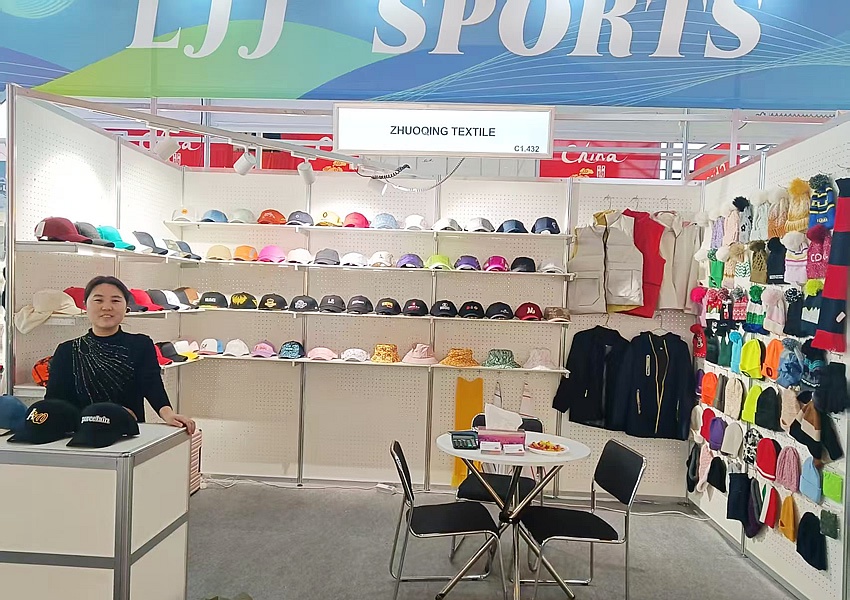
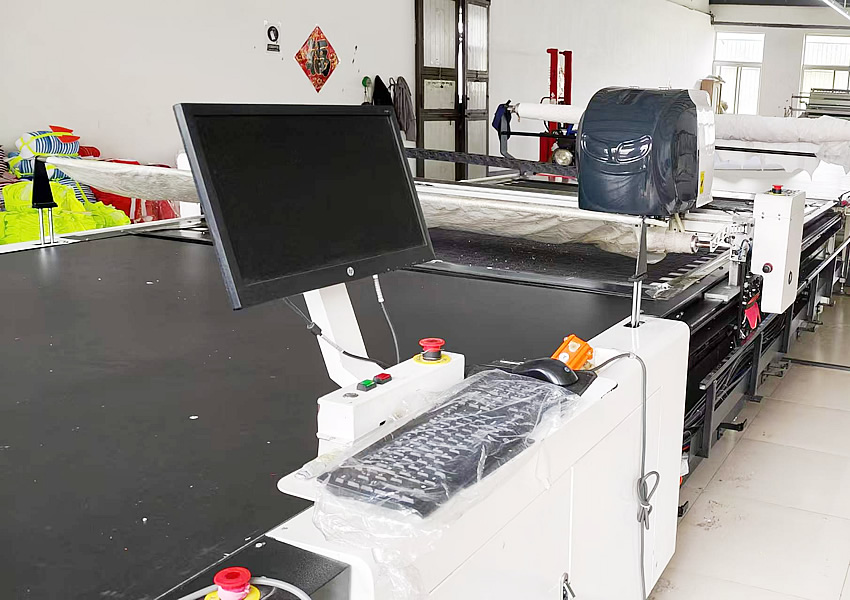
For buyers working across borders, it is also useful to choose a supplier that can coordinate the full chain instead of separating sourcing, manufacturing, quality inspection, export handling, and shipping communication across several parties. Shijiazhuang Jinling Times Import and Export Trade Co., Ltd. produces baseball caps, bucket hats, sports hats, knitted hats, and knitted scarves, with capacity for both larger production runs and smaller customized orders. Its workflow includes raw-material sourcing, manufacturing, finished-product sampling, packing, and export-oriented service, which can make timeline responsibilities easier to define for international hat orders.
That does not remove the need for a realistic deadline. A capable supplier supports stable delivery through planning and process control; it cannot make an unapproved design, a late order confirmation, or an already-passed shipping window disappear.
Can late hats still support the brand?
Yes, provided they are used in a context that makes sense. An evergreen logo cap can extend the event campaign through follow-up mailers, customer appreciation packages, social media prizes, sales visits, employee recognition, or future exhibitions. This works best when the cap design is not tied to a specific date, venue, or short-lived slogan.
There is also a brand-reputation consideration. If attendees were promised hats, silence can be more damaging than a clear follow-up. A simple message explaining that the items will be sent later, combined with a practical distribution plan, is usually better than leaving recipients uncertain. The delayed hats should still arrive in good condition, with accurate branding and packaging appropriate for the revised use.
The most useful lesson is not merely to order earlier. It is to treat promotional hats as a time-bound product project. Confirm the final design early, choose materials and decoration methods that suit the deadline, allow for quality checks and transport uncertainty, and set the true delivery deadline before the event setup begins. That planning protects both the hat order and the campaign it was meant to support.
Hot News

Deeply rooted in textile foreign trade for 28 years, JINLING SHIDAI continues to strengthen the core competitiveness of its source factories
Recently, Shijiazhuang Jinling Times Import and Export Trade Co., Ltd. has continued to advance its upgrades in production standardization process refinement. Since the establishment of the factory in 1997
Read Article →Fully guarantee the delivery of foreign trade orders, and efficiently and steadily advance the peak season production capacity of Jinling Times.
Entering the peak season for foreign trade shipments this year, the production workshops of Jinling Times are operating at full capacity in an orderly manner, production schedules for various
Read Article →
Need Custom Caps?
Send us your artwork and quantity — a detailed quotation within 24 hours.