


What Export Services Does Jinling Times Provide?
What Export Services Does Jinling Times Provide?
Sourcing Shijiazhuang Jinling Times Import and Export Trade Co., Ltd. baseball cap samples is a starting point, not the whole purchasing process. A sample helps establish whether a cap looks and feels right. The harder question is whether the supplier can carry those approved details through material procurement, bulk manufacturing, inspection, packing, and international shipment.
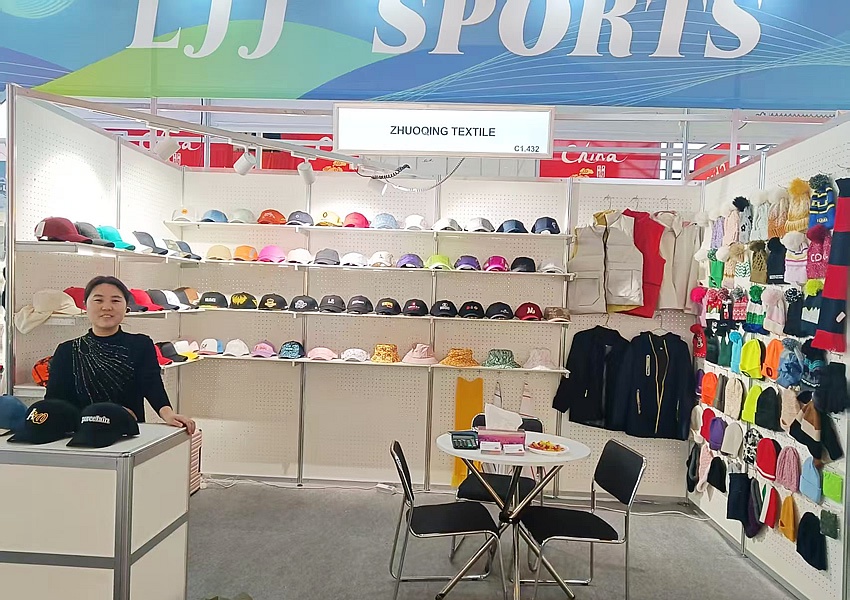
Jinling Times provides integrated export services across that chain, combining an independently operated production factory with a foreign trade team. Its main products include baseball caps, bucket hats, sports caps, knitted hats, and knitted scarves, with support for small custom orders, larger production runs, and OEM/ODM projects. For overseas buyers, the practical value is having production and export coordination connected rather than handled as separate transactions.
That does not remove the need for a clear purchasing specification. It makes that specification more useful: material choices, approved samples, inspection criteria, and shipping instructions can all refer back to the same agreed requirements.
Material Procurement Starts with How the Product Will Be Used
Raw material procurement is part of Jinling Times’ export service. In headwear, this involves more than choosing a fabric color. Crown fabric, reinforcement, sweatbands, closures, thread, and decorative components interact. A fabric that feels suitable on its own may behave differently after embroidery, panel assembly, or pressing.
The intended use should guide the discussion. A promotional baseball cap may place greater emphasis on appearance and budget, while a sports cap may need closer attention to weight, ventilation, and moisture handling. Knitted hats and scarves raise different questions around yarn composition, stretch, recovery, and hand feel. These are product-development considerations, not performance promises that can be assumed from a category name.
Buyers should therefore specify fiber composition, construction, color references, and any required testing before approving materials. If a particular fabric or yarn must remain consistent across repeat orders, ask how its availability will be checked. A visually similar substitute can change fit, embroidery appearance, or the finished product’s feel.
Factory-direct sourcing reduces intermediary handoffs, but material cost still depends on the actual specification and purchasing volume. A useful quotation should make clear which material has been priced and which changes would require a revised offer.
Sampling and Custom Manufacturing: Turning an Idea into a Repeatable Product
Jinling Times supports OEM and ODM production, alongside small-order customization and mass manufacturing. In practical terms, an OEM project usually starts with the buyer’s established design, while an ODM discussion may involve adapting a supplier-developed product. The exact scope of design input, artwork preparation, and development work should be confirmed for each project.
For baseball caps, a photograph alone rarely defines the order adequately. Crown profile, panel construction, visor shape, closure type, and logo placement all affect the result. Two caps can share the same color and logo yet fit differently because their patterns or reinforcement differ.
Sampling is where these differences should be resolved. Rather than approving a sample with a general “looks good,” record what has actually been accepted:
- Measurements, fit, and the agreed tolerance for relevant dimensions.
- Fabric or yarn reference, color, and visible texture.
- Logo size, position, decoration method, and appearance.
- Closure, internal finishing, labels, and packaging details.
- Any sample features that will change before bulk production.
The approved sample should become a production reference, supported by written specifications. Buyers should also establish whether it uses the intended bulk materials. A development sample made from available stock can help confirm shape, but it may not settle final color or fabric behavior.
Small-order capability is useful for testing a design or assortment, although it does not imply that every combination of fabric, color, and decoration is economical at any quantity. Minimum order quantities, sample charges, tooling costs, and revision arrangements need project-specific confirmation.
Production Capacity Matters, but Scheduling Depends on the Order
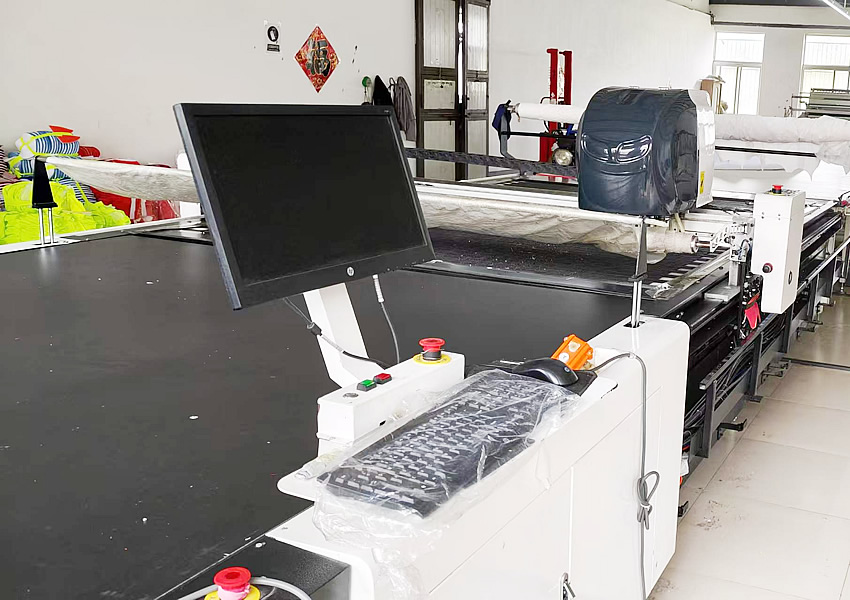
The company’s factory has standardized workshops, four assembly lines, automated cutting equipment, multiple automated sewing machines, and ironing and packaging facilities. This provides a manufacturing base for both customized orders and larger production runs.
Equipment alone, however, does not establish a delivery date. Material availability, sample approval, decoration complexity, order mix, and the current production schedule all affect timing. An order containing several designs may require more coordination than a larger quantity of one approved style.
When discussing delivery, distinguish the factory completion date from the shipment departure date and the required arrival date. These are separate milestones. Buyers planning a seasonal launch should work backward from the date goods must be available for sale, allowing for transport, customs procedures, and receiving checks.
It is also worth identifying when the production schedule becomes firm. If artwork or materials remain unapproved, a quoted lead time may still depend on those outstanding decisions. Written milestones make delays easier to identify before they affect the whole order.
Quality Inspection Should Check More Than Appearance
Jinling Times describes a quality-control process covering raw material selection, manufacturing, finished-product sampling, packing, and shipping. For buyers, the important next step is to connect those checkpoints to measurable acceptance criteria.
A baseball cap inspection might examine panel symmetry, seam condition, visor alignment, closure function, and consistency of logo placement. Knitted products call for attention to dimensions, construction defects, loose yarn ends, and agreed stretch characteristics. The relevant checks differ by product; a generic inspection list can overlook the feature most likely to cause a complaint.
Inspection scope also matters. A visual check cannot establish every chemical or performance requirement. Where testing is necessary, the buyer and supplier should confirm the test method, applicable product or material, laboratory requirements, and whether reports must be available before shipment.
The company’s stated quality-management approach should not be treated as evidence that every product already holds every destination-market certification. Request documentation relevant to the exact item and market. Buyers requiring independent pre-shipment inspection should agree access, timing, sampling, and the response to a failed inspection before production begins.
Export Coordination, Packing, and Cross-Border Logistics
Jinling Times’ foreign trade team supports international business coordination and cross-border logistics. Its business covers Europe, the Middle East, South Africa, South America, and other markets. That international scope is relevant to communication and order handling, but the responsibilities for each shipment still need to be agreed individually.
Export logistics begins before goods leave the factory. Structured caps need packing that considers crown deformation and visor damage; knitted items require attention to packing cleanliness and moisture exposure. Packing choices also affect carton dimensions, freight calculations, and warehouse handling. The cheapest packing arrangement is not necessarily the lowest-cost option if goods arrive misshapen or require substantial reworking.
Before confirming transport, establish the following details:
- The agreed Incoterm, named place or port, and allocation of freight and clearance responsibilities.
- Transport mode, estimated transit time, and whether delivery timing is critical.
- Units per carton, carton measurements, weights, shipping marks, and assortment requirements.
- Required commercial documents and any destination-specific information identified by the importer or customs broker.
Do not assume that logistics support includes import duties, destination clearance, insurance, or final delivery. Those elements depend on the quotation and agreed terms. Product classification and import requirements should also be checked against the actual construction and composition, rather than inferred from a broad description such as “fashion accessories.”
After-Sales Support and the Details That Make Reorders Easier
After-sales support is included in Jinling Times’ service chain. Its usefulness depends on how clearly problems can be documented and assessed. Buyers should agree the reporting process, relevant time limits, and available remedies in the order terms rather than assume a standard replacement or refund policy.
If an issue appears on receipt, preserve carton markings, product labels, photographs, affected quantities, and inspection notes. This helps distinguish a manufacturing discrepancy from transport damage or a misunderstanding about the approved specification. A precise report gives both sides a better basis for deciding what action is appropriate.
For repeat orders, retaining the approved sample and specification is equally valuable. Confirm whether materials, colors, trims, and decoration files remain unchanged, and whether a new approval is needed. Reordering by product name alone leaves too much room for variation.
Assess the Complete Order, Not Just the Sample Price
Jinling Times’ export offering combines material procurement, custom headwear manufacturing, quality control, overseas sales coordination, logistics, and after-sales support. Its factory-direct structure can reduce handoffs between production and trade teams. The real purchasing benefit depends on whether those services are tied to a clear, workable order specification.
A productive next step is to submit a reference sample or technical brief together with quantities by style and color, destination, required arrival date, and testing or labeling requirements. Ask for a quotation that separates product specifications, sampling arrangements, production timing, packing, and shipping responsibilities. That provides a stronger basis for comparing suppliers than a unit price or an attractive sample alone.
Hot News

Deeply rooted in textile foreign trade for 28 years, JINLING SHIDAI continues to strengthen the core competitiveness of its source factories
Recently, Shijiazhuang Jinling Times Import and Export Trade Co., Ltd. has continued to advance its upgrades in production standardization process refinement. Since the establishment of the factory in 1997
Read Article →Fully guarantee the delivery of foreign trade orders, and efficiently and steadily advance the peak season production capacity of Jinling Times.
Entering the peak season for foreign trade shipments this year, the production workshops of Jinling Times are operating at full capacity in an orderly manner, production schedules for various
Read Article →

{item.title}
{item.description}
Need Custom Caps?
Send us your artwork and quantity — a detailed quotation within 24 hours.