


How Far in Advance Should You Order Event Hats with a Logo?
How Far in Advance Should You Order Event Hats with a Logo?
Your event date is fixed—but will your branded hats arrive in time? As a planning guideline, start sourcing custom event hats 8–12 weeks ahead, allowing time for artwork approval, sampling, production, and shipping. Larger orders, complex embroidery, and international delivery may require a longer buffer. This is a starting point for planning, not a delivery promise: the right schedule depends on the hat, the decoration, and the route to your venue.
If your supplier search includes “Ltd. knitted scarf supplier,” verify that shortlisted manufacturers also produce custom hats. Experience with knitted accessories does not automatically establish capability in structured baseball caps, embroidered bucket hats, or performance headwear. What matters is whether the supplier can confirm your specifications and work backward from your required arrival date.
Count backward from delivery—not from the event opening
The most useful deadline is the date your team needs the hats in hand. That might be before the event itself if merchandise must be counted, packed into attendee bags, allocated to staff, or forwarded to several locations. A delivery on opening morning leaves little room to correct a shortage or replace damaged cartons.
Ask suppliers to distinguish three dates: production completion, dispatch, and arrival at the named destination. “Ready in four weeks” is incomplete unless everyone understands which milestone it describes. A factory completion date does not include export handling, international transit, customs clearance, or local delivery.
For an initial schedule, work backward through these stages:
- Receiving, counting, and distribution before the event.
- Transport, clearance, and final delivery.
- Finished-product inspection and packing.
- Bulk production and logo application.
- Sample approval, artwork preparation, and material confirmation.
Some activities can overlap, but only after the supplier confirms which ones. Do not assume bulk materials will be reserved while your team is still deciding between colors.
When is an 8–12-week window enough?
That window is a reasonable starting point for a defined project: an established hat construction, available fabric, a manageable logo, prompt approvals, and a confirmed shipping route. It becomes less dependable when several of those conditions remain unresolved.
The following distinctions help frame the conversation. They are planning choices, not guaranteed lead times.
For an overseas order moving by sea, or a project involving custom-dyed fabric, begin earlier than the baseline window unless the supplier confirms a workable schedule. Conversely, locally stocked hats with straightforward decoration may be possible sooner. Neither assumption should replace a written project timeline.
Fabric and construction can take longer than the logo
Buyers often focus on embroidery turnaround while leaving the underlying hat undecided. Yet a change from a soft cotton bucket hat to a structured sports cap affects more than appearance. It can change fabric sourcing, panel construction, reinforcement, sewing operations, and the way the logo sits on the finished surface.
Available fabric colors generally offer a simpler procurement path than a specially developed shade. However, “navy” or “brand blue” is not a sufficiently precise specification. Agree on a physical reference or an accepted color standard, and clarify how the production material will be approved. Screens are useful for discussion, but unreliable for final color acceptance.
For outdoor events, consider the actual wearing conditions. Fabric weight, ventilation, sweatband construction, and fit may matter more than elaborate branding. If moisture-management, recycled-content, or other performance claims are required, ask what documentation or testing supports them. Do not treat a fabric description as proof of performance.
Knitted hats present a different set of decisions: yarn availability, knit structure, cuff depth, stretch, and label placement. A coordinated hat-and-scarf package also creates a dependency between two products. Confirm whether both items share an achievable completion date before promising a complete event kit.
Approve the logo before committing to bulk production
A digital mockup confirms intent; it does not show exactly how thread, ink, or a patch will behave on the selected hat. Embroidery can lose fine text or pull lightweight fabric. A design crossing a cap’s center seam may need adjustment. A patch adds attachment work and can change the feel of an otherwise soft hat.
Send editable vector artwork where available, along with logo dimensions, placement, color references, and any brand restrictions. For embroidery, the supplier must translate the design into a stitch file. More stitches do not automatically mean better results; stitch density must suit the fabric and design.
A physical pre-production sample is especially valuable for a new construction or unfamiliar decoration method. Check the logo at actual size, inspect puckering and backing, try the fit, and look at placement on the worn hat—not only when it lies flat.
Agree on what starts the production clock. Depending on the supplier’s terms, that may require payment, written sample approval, final quantities, and material confirmation. Approving artwork while leaving the closure or fabric unresolved does not necessarily release the order for manufacturing.
Assign one person to consolidate feedback from marketing, procurement, and event operations. Conflicting approvals can consume the time you intended to keep as a delivery buffer.
Evaluate factory capacity through the actual order
A small order is not always a fast order. Special materials and machine setup still take time. Equally, a large order may be practical when materials are available and the construction is already established. Quantity matters, but so do the number of designs, decoration locations, color combinations, and packing variations.
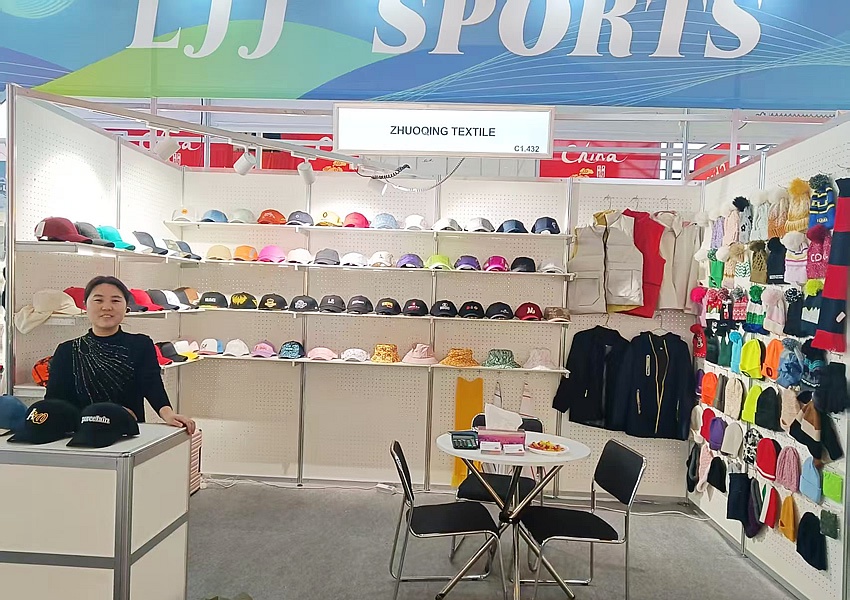
Shijiazhuang Jinling Times Import and Export Trade Co., Ltd. combines an independent production factory with a foreign trade team, covering material procurement, manufacturing, inspection, and cross-border logistics coordination. Its product range includes baseball caps, bucket hats, sports hats, knitted hats, and knitted scarves, with both small-order customization and larger OEM/ODM production capabilities.
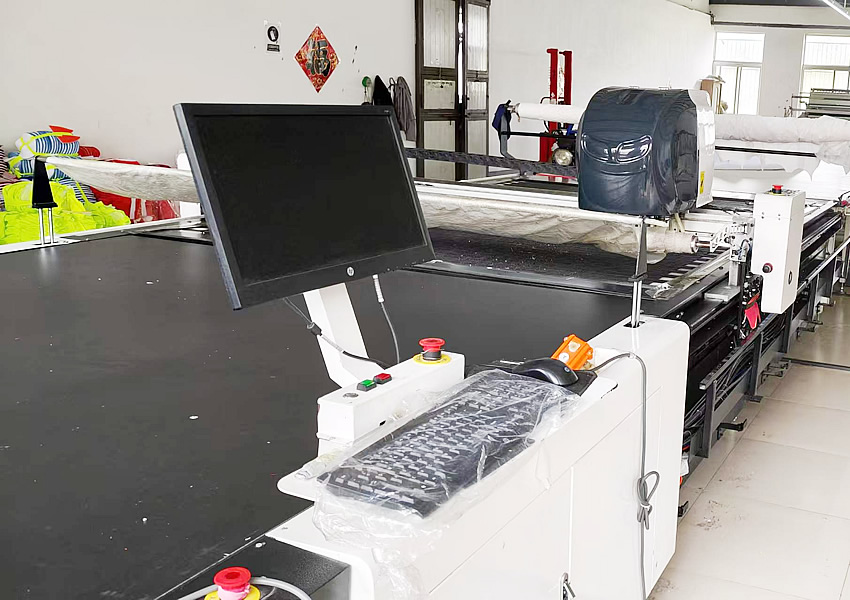
Its four assembly lines and automated cutting and sewing equipment are relevant capabilities, but equipment alone does not establish your delivery date. For any manufacturer, ask whether your order has an allocated production slot, whether materials are secured, and how decoration fits into the schedule. Also confirm who communicates delays and who authorizes corrective action.
Quality checks should cover the agreed specifications: construction, measurements, logo execution, quantity, and packing. Destination-specific labeling, testing, or documentation requirements should be identified before production. Broad assurances about “international quality” are not a substitute for checking the requirements applicable to your product and market.
Protect the shipping buffer
When production runs late, the easiest response is often to suggest faster freight. That can help, but it cannot recover time lost to unfinished goods, missing documents, or unresolved import arrangements. Confirm the delivery address, receiving hours, importer responsibilities, and agreed Incoterm before dispatch.
Hat packing also affects the decision. Structured crowns need protection against crushing, while knitted products compress differently. Ask for estimated carton dimensions and gross weights before comparing transport options. A freight estimate based only on the number of hats may miss the shipment’s chargeable volume.
Check for factory shutdowns, public holidays, and anticipated carrier congestion along the route. Build contingency around the stages with the least flexibility, rather than adding an unexplained buffer at the end.
If the event is already close, simplify deliberately
A short deadline calls for fewer variables, not less inspection. Ask about available blanks or materials, reduce colorways, use one decoration location, and avoid unnecessary custom packaging. Confirm that stock is actually allocated to your order before accepting a rush schedule.
A split shipment may make sense when staff hats are essential before attendee merchandise. However, it adds freight and handling costs, and the first batch needs a clearly agreed quantity and destination. Treat it as a planned alternative, not an informal promise to “send some first.”
Start the supplier conversation with the required in-hand date, delivery location, quantities, preferred hat construction, logo files, and approval contact. Then request dated milestones for sampling, production release, inspection, and dispatch. Order early enough to resolve the decisions that affect quality—not merely early enough to fit a quoted sewing time.
Hot News

Deeply rooted in textile foreign trade for 28 years, JINLING SHIDAI continues to strengthen the core competitiveness of its source factories
Recently, Shijiazhuang Jinling Times Import and Export Trade Co., Ltd. has continued to advance its upgrades in production standardization process refinement. Since the establishment of the factory in 1997
Read Article →Fully guarantee the delivery of foreign trade orders, and efficiently and steadily advance the peak season production capacity of Jinling Times.
Entering the peak season for foreign trade shipments this year, the production workshops of Jinling Times are operating at full capacity in an orderly manner, production schedules for various
Read Article →

{item.title}
{item.description}
Need Custom Caps?
Send us your artwork and quantity — a detailed quotation within 24 hours.