


What Is Jinling Times’ Minimum Order Quantity for Custom Hats?
Jinling Times offers small-order customization for hats, but that does not establish a fixed minimum order quantity for every design. A numerical MOQ needs to be agreed for the particular hat, material, color assortment, and decoration you want to order. Buyers should therefore obtain a written quantity requirement tied to a defined specification before committing to a launch budget or inventory plan.
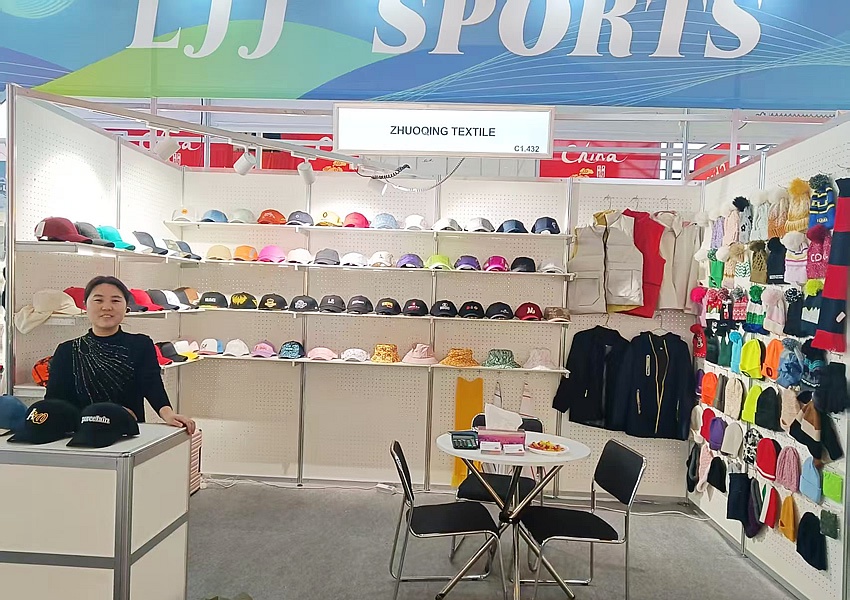
Shijiazhuang Jinling Times I/E Trading Co. handles products including baseball caps, bucket hats, sports hats, and knitted hats, with both small-order customization and larger production runs within its stated capabilities. That makes an enquiry for a limited initial order reasonable. It does not establish that every design is available at the same starting quantity, or that different styles and colors can be combined to reach one minimum.
For a buyer, a useful answer should read something like “minimum quantity per style and color, with this fabric and this logo treatment.” A quantity without those conditions leaves too much room for the quotation to change.
Find out what the minimum applies to
The first point to settle is whether the quoted MOQ applies to the whole order, each hat style, each color, or each separate design. These arrangements produce very different purchasing commitments, even when the headline quantity is identical.
Consider an illustrative order of 300 hats split across three colors. If the minimum applies to the total order and the color split is accepted, that assortment could fit the requirement. If the minimum applies separately to each color, the same assortment could require a much larger purchase. This example is arithmetic only; it is not a statement of Jinling Times’ MOQ.
Logo variations deserve the same attention. Two caps with identical construction and fabric may still represent separate production requirements if they carry different embroidery, patches, or labels. A retailer buying one branded design and a distributor ordering several customers’ logos should ask different questions, even when their total quantities match.
A precise MOQ discussion should establish:
- Whether the minimum applies per order, style, color, size, or logo design.
- Whether different colors or sizes can share one minimum.
- Whether the quoted quantity includes all requested labels, packaging, and decoration.
- Whether any component carries a separate minimum or purchasing charge.
These are questions to put to Jinling Times, rather than assumptions about its order policy. Its ability to accept small customization projects does not, by itself, answer how an individual order will be grouped.
For buyers testing demand, the allocation can matter as much as the total. A manageable order spread evenly across several colors may still leave too much stock in weaker options. Before requesting a mixed assortment, decide which variations are essential to the launch and which can wait until sales provide a clearer basis for replenishment.
Why the hat specification can change the starting quantity
A custom hat can involve a modest change to an existing design or a new combination of materials, construction, and finishing. The further the specification moves from components and processes already available for the order, the more production and sourcing questions need to be resolved. Those questions can affect the minimum quantity, the price, or both.
Existing materials versus specially sourced fabric
Fabric availability is an important starting point. If an acceptable material and color are available for the proposed production run, a small order may be easier to arrange. A request for a particular fabric composition, weight, finish, or specially matched color can introduce separate sourcing requirements.
The same issue applies to knitted hats, where yarn selection and color requirements can influence purchasing arrangements. Jinling Times’ acceptance of a finished-hat quantity should not be taken as confirmation that every requested material is available at that quantity.
Ask which part of the specification creates the constraint. If a particular fabric requires a larger purchase, an alternative material may preserve the intended appearance or function while allowing a more practical opening order. That substitution should be assessed against the product’s use: a promotional giveaway and a retail product intended for repeated wear may justify different compromises.
Logo method and design detail
Embroidery, printing, and patches involve different preparation and production steps. The available method for your proposed hat should be established with the supplier, along with any effect on the order quantity. A simple logo should not automatically be assumed to qualify for a lower MOQ, and a complex logo should not automatically be assumed impossible at a small quantity.
Supply the actual artwork wherever possible. Logo dimensions, placement, color requirements, and the number of decorated positions give the quotation a firmer basis than a general request for “custom branding.” Small lettering or fine detail may also need adjustment to reproduce clearly using the selected process.
Separate one-time preparation charges from the minimum order requirement. A supplier might be able to make a small quantity while charging separately for preparation. Alternatively, a component or process may impose a quantity condition. These arrangements have different budget implications and should be visible in the quotation.
Construction, trims, and packaging
Changes to the crown, brim, closure, lining, or size arrangement can create a more involved project than adding a logo to an agreed hat body. For knitted products, a different shape or knitting specification may also change the production requirements. Ask whether the proposed design can use an existing construction or requires development.
Custom labels, branded closures, patches, and individual packaging can introduce their own purchasing conditions. Where that happens, establish whether you must buy extra components, pay an additional charge, or increase the finished-hat quantity. Do not assume that a small finished-goods order automatically includes equally small quantities of every accessory.
It helps to divide the specification into essential features and flexible preferences. A brand’s main logo and intended fit may be essential; an exact packaging color may be negotiable. That distinction gives the supplier useful room to propose a smaller opening order without changing the product’s purpose.
Choose a workable opening order, beyond the lowest MOQ
The lowest quantity a factory can accept may still be a poor commercial fit. For an initial order, assess the total cash commitment, the stock you can realistically sell or distribute, and the cost of any compromises needed to reach that quantity.
A lower quantity can reduce inventory exposure while increasing the cost per hat, because preparation and production costs are spread across fewer units. A larger run may improve the unit quotation but tie up more cash in untested colors or designs. Neither outcome should be judged from the unit price alone.
Request quotations for your preferred starting quantity and one larger quantity using the same specification. Keeping the design constant makes the comparison useful. If the larger option also changes the fabric, decoration, or packaging, it becomes difficult to tell what caused the price difference.
Compare the total payable amount on the same delivery basis. Check whether sampling, artwork preparation, labels, packaging, and transport are included or charged separately. A low product price offers little guidance if the opening order requires substantial additional expenditure.
For a brand testing a first collection, concentrating the order in one core style and a limited color selection may make the result easier to interpret. For an event buyer, the required distribution quantity and arrival date may leave less flexibility. A retailer replenishing an established product may be more concerned with repeat-order conditions than the smallest possible first purchase.
Sampling also needs a separate agreement. Jinling Times’ small-order capability does not establish a sample price, sample quantity, or policy for crediting sample charges against production. Ask what sample can be supplied, how closely it will represent the intended order, and which details it will allow you to approve.
An approved sample can help establish the agreed shape, fabric, color, logo position, and finishing. Keep those approvals connected to the bulk quotation. Otherwise, a sample accepted under one specification and a purchase order written under another can leave the parties working toward different results.
Timing deserves an explicit answer as well. A small order is not automatically a fast order: material availability, sample revisions, production scheduling, and transport can still affect delivery. For a dated promotion or seasonal launch, ask what must be approved before the delivery schedule can be agreed.
How to get a usable MOQ answer from Jinling Times
A concise specification gives the supplier enough information to answer the quantity question meaningfully. You do not need to resolve every manufacturing detail before making contact, but you should identify the product, the intended assortment, and the features that cannot change.
Include the following in the enquiry:
- Hat type: baseball cap, bucket hat, sports hat, or knitted hat, with a reference image or drawing if available.
- Target quantity: the desired total and the proposed split by color, size, and logo.
- Material requirements: preferred fabric or yarn, required color, and any acceptable alternatives.
- Branding: artwork, approximate dimensions, placement, and preferred decoration method.
- Finishing: labels, closures, patches, and packaging that must be included.
- Delivery requirement: destination and required arrival date, distinguishing a firm deadline from a preference.
A direct request could read: “Please quote our proposed hat specification and confirm the minimum quantity per style, color, size, and logo design. Please identify any separate material or accessory minimums, list preparation and sample charges separately, and advise whether an alternative specification would allow our target opening quantity.”
This wording makes room for a practical alternative without giving unrestricted permission to change the product. If a proposed adjustment affects appearance, fit, or intended use, review it before accepting the revised quantity and price.
Before placing the order, have the agreed minimum and assortment recorded alongside the final specification. The quotation should make clear what quantity is being purchased, which variations it covers, what additional charges apply, and what approvals govern production. For a planned repeat product, also ask whether a later order can use the same materials and components, and whether its quantity requirement will need a fresh quotation.
Jinling Times’ small-order customization capability provides a basis for discussing a limited first run. The actionable answer to its MOQ is the quantity it agrees for your chosen hat and assortment. Once that figure is attached to a clear specification and a complete opening-order cost, you can decide whether to proceed, simplify the design, or concentrate the launch in fewer variations.
Hot News

Deeply rooted in textile foreign trade for 28 years, JINLING SHIDAI continues to strengthen the core competitiveness of its source factories
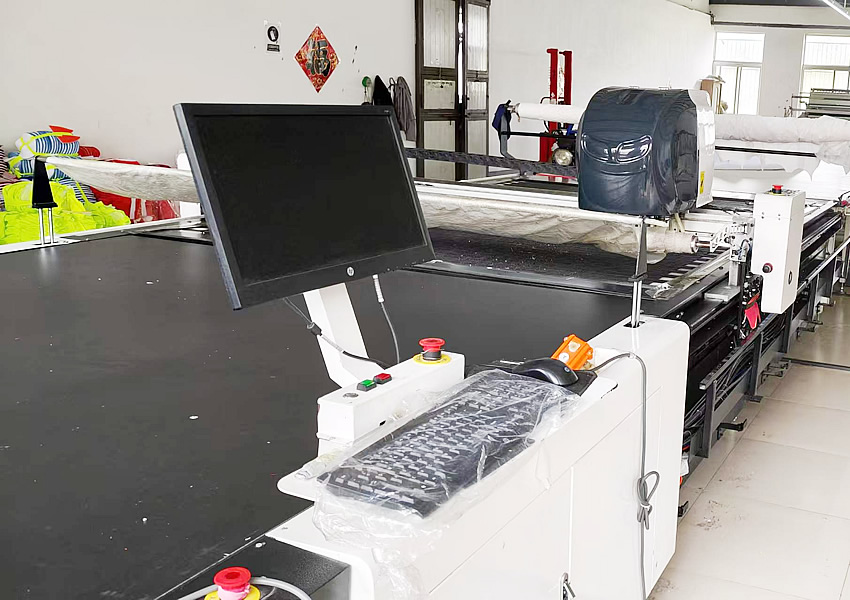
Recently, Shijiazhuang Jinling Times Import and Export Trade Co., Ltd. has continued to advance its upgrades in production standardization process refinement. Since the establishment of the factory in 1997
Read Article →Fully guarantee the delivery of foreign trade orders, and efficiently and steadily advance the peak season production capacity of Jinling Times.
Entering the peak season for foreign trade shipments this year, the production workshops of Jinling Times are operating at full capacity in an orderly manner, production schedules for various
Read Article →

{item.title}
{item.description}
Need Custom Caps?
Send us your artwork and quantity — a detailed quotation within 24 hours.