


What Goes Into the Price of a Custom Baseball Cap: How to Read a Factory Quote Line by Line
What Goes Into the Price of a Custom Baseball Cap: How to Read a Factory Quote Line by Line
Short answer: a custom baseball cap quote is built from nine line items — fabric, stiffener, closure, sweatband, cut-and-sew labour, decoration, labels, packaging, and factory overhead. Most buyers compare the bottom line. The bottom line is the least comparable number on the page, because it hides whether tooling is included, which fabric weight was assumed, and how many logo placements were priced.
This article deliberately does not publish price ranges. Cap pricing moves with cotton, freight, duty and exchange rates; a figure printed here would be misleading within a season, and a stale number is worse than no number. What does not change is the structure of a quote. Learn the structure and you can read any quotation, from any factory, at any time.
The anatomy of a cap quote
Materials typically account for the largest share of unit cost — commonly 55–65% — with labour around 20–25%. That ratio is the useful part: fabric choice is the biggest lever you have, and it is also the easiest thing for a supplier to quietly change.
[Fig 1 — stacked bar: fabric, stiffener, closure, sweatband, labour, decoration, labels, packaging, overhead]
One-off versus per-unit: the distinction that decides what you actually pay
This is the single most important thing to establish before comparing anything.
A first order is where one-off costs hurt. A fifth reorder is where per-unit costs matter. Two quotes that differ by a few cents per unit can end up far apart once tooling, digitising and inspection are added to one side and bundled into the other.
Ask one question before you compare anything: which of these are included in the stated unit price, and which are billed separately? A supplier that bundles tooling into the unit price is not automatically cheaper. A supplier that cannot answer has not priced your order properly.
The nine variables to align before you read any total
Two quotes cannot be compared until these nine match. When one comes in materially lower than the rest, the cause is almost always that one of them was quietly reduced — most often fabric weight or stiffener.
- Fabric weight — if one quotes a heavier twill, it is a different cap.
- Structure — structured adds a stiffener and a shaping operation; unstructured does not.
- Stitch count — decoration is priced by stitch count and thread colours.
- Number of placements — front only, or front plus side plus back arch?
- Packaging level — bulk packed and retail-ready are different packing programs.
- Tooling in or out — digitising, moulds and patches bundled or extra?
- Sample terms — charged, free, or credited against bulk?
- Trade terms — EXW, FOB, CIF and DDP are different obligations.
- Payment terms — deposit ratio and balance trigger affect your cash, not your unit price.
Takeaway you can use today. Paste these nine lines into your next enquiry email and ask every supplier to answer them in writing. You will get fewer quotes back — the ones who cannot answer will drop out — and the ones you do get will be genuinely comparable.
What actually moves the number, ranked
Direction and relative weight, not amounts — these hold regardless of the season.
Note which of these are paid once and which repeat. That split is what makes a 500-piece order behave completely differently from a 5,000-piece reorder of the same cap.
The seven lines that sit outside the FOB price
A factory price and a landed cost are different numbers. Between them sit seven lines that have nothing to do with the factory's quote: inland freight to port, export clearance and documentation, ocean or air freight, insurance, import duty, destination port and inland handling, and third-party inspection or testing.
If you only ever compare factory prices, you are comparing roughly two-thirds of what you will actually spend. Ask for the same trade terms from every supplier so at least the freight and duty lines are your own to control.
MOQ, briefly
Minimum order quantity is the point at which a factory can buy fabric in a full lot, set up once, and run a stable batch without losing money — which is why 500 pieces is the common floor for full custom work, and why smaller trial runs usually carry a premium and restrict you to stock fabrics and stock colours. The useful question is not "can you do 200?" but "what changes at 200?" The detail behind what affects the minimum order quantity for hat OEM and ODM service is worth reading before you negotiate.
Lead time: the critical path, and what breaks it
Design approval to delivered goods is commonly quoted at 25–42 days. Add sea transit and 8–12 weeks door-to-door is the realistic planning number for a first order. Air freight shortens transit to 5–9 days but not production — and on tight unit economics it can erase the margin the order was built on.
Sustainable material programs add 7–14 days for certification chaining. Peak season — broadly Q3 for northern-hemisphere winter goods and Q1 for summer goods — creates capacity pressure, so book a production slot before you finalise artwork, not after.
[Fig 2 — Gantt: the eight stages laid end to end, with freight marked separately]
Where your caps are made: China's headwear clusters
Region is not a footnote. It sets your cost base, your finishing options and your realistic lead time.
A buyer paying for a premium retail finish usually ends up in Guangdong. A buyer optimising landed cost on a stable, high-volume cotton program usually ends up in Hebei or Zhejiang. Knowing which you are before you send the first enquiry saves a full round of quotations.
[Fig 3 — simplified map or labelled grid of the five clusters]
Eight checks that separate a factory from a middleman
Every supplier website says "factory direct". Very few give you a way to check. These eight do.
- Business licence scope. Ask for the 营业执照 and check it on the National Enterprise Credit Information Publicity System (gsxt.gov.cn). The registered scope should name manufacturing, not only trading.
- Name consistency. Company name, factory name, bank account name and export record should line up. Mismatches are the most common tell.
- Certificates with numbers. A real certificate carries an issuing body, a registration number and a validity date — for example ISO 9001 certified to GB/T 19001-2016 / ISO 9001:2015, or a BSCI / SEDEX / WRAP audit. Factory certification documents missing any of those three fields are decoration.
- Live video walkthrough. Ask for a call at a fixed time and request to see cutting, sewing, embroidery and packing in that order. A trading company cannot produce that sequence on demand.
- Technical depth. Ask what stiffener weight suits your crown, or what stitch count your logo needs. Factories answer with specifics; intermediaries answer with "we will check".
- MOQ logic. A factory explains its minimum in terms of fabric lots and machine setup. A flat number with no reasoning usually means a reseller.
- Sample-to-bulk binding. Ask what is locked to the approved sample: fabric mill, weight, stiffener, thread reference, placement measurements. Vagueness here predicts drift on reorder.
- Export capability. Confirm the company holds its own foreign-trade operator registration and can handle FOB, CIF or DDP, plus its own customs documentation.
Red flags worth walking away from: refusing a live video walkthrough; certificate images with no registration numbers; a price far below the rest of your shortlist with no structural explanation; refusal to make a pre-production sample; payment requested to a personal bank account.
Failure modes, and the control that catches each one
Five commitments worth getting in writing
Reading a quote is one thing. Knowing what your supplier will actually stand behind is another. These five are the ones that matter most on a first order — and they are worth asking any factory for, including us.
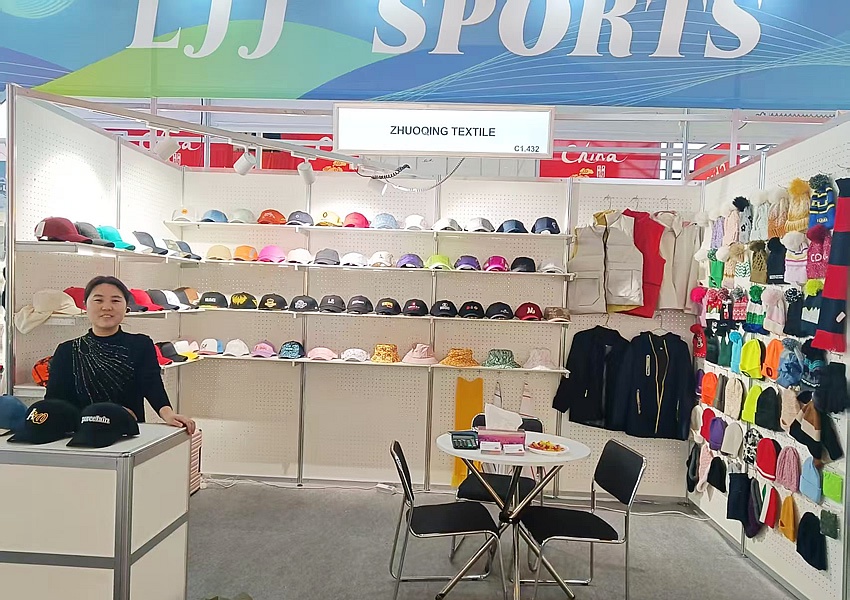
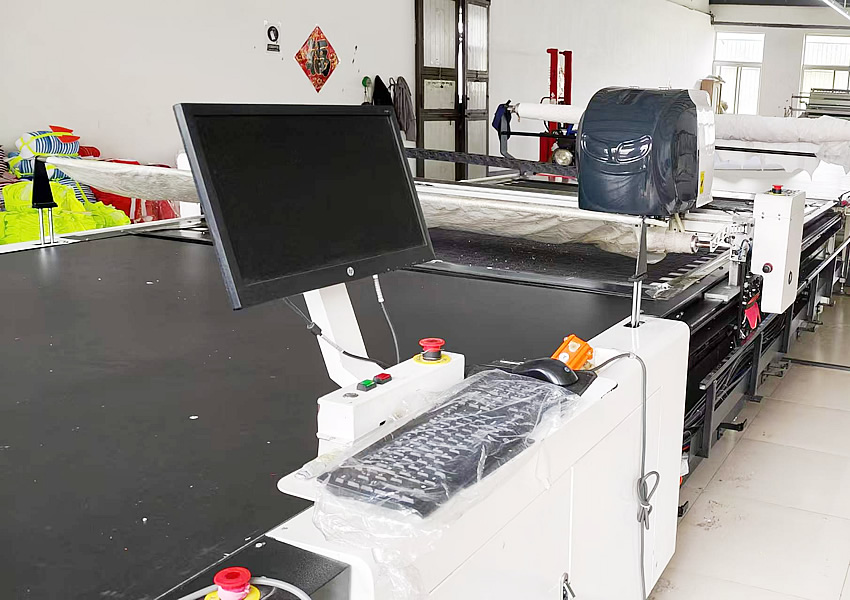
We have run headwear as a source factory in Hebei since 1997 and exported since 2005, with cutting, sewing, embroidery, inspection and packing under our own roof. That structure is what makes the five commitments above enforceable rather than aspirational — there is no third party to negotiate with when something goes wrong.
A case in point. An overseas organisation ordered several thousand promotional caps for a fixed-date event: one logo, uniform print placement, and no tolerance for variation between pieces. The binding constraint was not price, it was the date. We scheduled capacity before the artwork was final, confirmed the first piece, inspected mid-run, and full-inspected the finished goods so that print position and colour stayed consistent across the run. The shipment arrived ahead of the event, and the programme has reordered annually since. More client programmes.
What to send with your first enquiry
Quotation accuracy is a function of brief quality. Send these eight items and the first number you receive is usually close to the number you pay:
- Reference image or physical sample
- Panel count, structure and crown profile
- Fabric type and target weight
- Pantone reference per colourway
- Logo artwork in vector format, with placement and dimensions
- Quantity split by SKU, not a single total
- Labels and packaging requirements
- Destination and preferred trade terms
What information is needed to quote custom baseball caps covers each of these in detail, and our after-sales guarantee sets out what happens after the goods ship.
Closing CTA: Jinling Times has manufactured headwear in Hebei since 1997 and exported since 2005, running sampling, production, inspection, customs documentation and logistics as one source factory from 500 pieces per style. Send your artwork, quantity and destination and you will receive an itemised quotation within 24 hours — every line shown, tooling and sample terms stated separately, so you can compare it properly. Browse the custom baseball caps range to shortlist a construction before you write your brief.
FAQ (wrap in FAQPage schema)
How much does a custom baseball cap cost?It depends on fabric weight, structure, decoration, quantity and destination — which is why any single published figure is misleading. Rather than chase a number, send the same eight-item brief to three factories and compare the responses line by line. The spread you see between them will tell you more than a published average.
Why does the unit price fall as quantity rises?Because fixed costs — fabric lot minimums, machine setup, digitising, cutting markers — are spread across more caps. The material cost per cap barely changes; the setup cost per cap changes a lot.
What is the minimum order for custom baseball caps?500 pieces per style is the common floor for full custom work. Some factories run smaller trial programs at a premium and with restricted fabric and colour choice.
Are samples free?Policies differ. Established factories often supply a sample if you cover the courier, or credit the sample cost against the bulk order. Confirm both points in writing before sampling starts.
How long does production take?Sample 5–15 days after artwork approval; bulk 15–35 days after sample sign-off. Including sea freight, plan 8–12 weeks door-to-door for a first order. Air freight cuts transit to 5–9 days but not production time.
What is not included in an FOB price?Freight and insurance, import duty, inland handling at destination, third-party inspection, testing, and any tooling or digitising charges not explicitly bundled in. Duty in particular can be a substantial share of landed cost and varies by classification and destination.
How do I compare two cap quotes fairly?Match nine variables first: fabric weight, structure, stitch count, number of placements, packaging level, whether tooling is included, sample terms, trade terms and payment terms. Only then read the totals.
How do I know I am dealing with a real factory?Check the business licence scope on gsxt.gov.cn, match company and bank account names, verify certificates carry registration numbers and validity dates, and request a live video walkthrough of cutting, sewing, embroidery and packing.
Which certifications do I need?For the United States, CPSIA applies to children's caps and OEKO-TEX Standard 100 is the usual adult benchmark. For the European Union, REACH compliance plus BSCI or SEDEX social compliance. GRS for recycled content claims and GOTS for organic cotton. For most retail channels, OEKO-TEX plus BSCI is the practical minimum pair.
Which region of China should I source from?Guangdong for premium finishing and complex construction; Hebei for cost efficiency on stable volume programs, knitwear and winter goods; Zhejiang for small batches, fast prototyping and trend-led styles; Fujian for compliance-heavy licensed programs.
Hot News

Deeply rooted in textile foreign trade for 28 years, JINLING SHIDAI continues to strengthen the core competitiveness of its source factories
Recently, Shijiazhuang Jinling Times Import and Export Trade Co., Ltd. has continued to advance its upgrades in production standardization process refinement. Since the establishment of the factory in 1997
Read Article →Fully guarantee the delivery of foreign trade orders, and efficiently and steadily advance the peak season production capacity of Jinling Times.
Entering the peak season for foreign trade shipments this year, the production workshops of Jinling Times are operating at full capacity in an orderly manner, production schedules for various
Read Article →
Need Custom Caps?
Send us your artwork and quantity — a detailed quotation within 24 hours.