


What Are the Top 3 Marketing Goals Achieved by Using Promotional Event Hats?
What Are the Top 3 Marketing Goals Achieved by Using Promotional Event Hats?
Key Takeaways
Promotional event hats achieve three measurable marketing goals: brand awareness, customer loyalty, and lead generation.
A single branded hat can generate hundreds of impressions because it is worn in public and reused daily.
Quality and customization directly affect retention and perceived brand value.
QR codes, custom URLs, and unique discount codes turn hats into trackable lead-generation tools.
For B2B buyers, the strongest ROI comes from choosing the right hat style, material, and distribution strategy.
Introduction
Promotional event hats achieve three measurable marketing goals: brand awareness, customer loyalty, and lead generation.
A single branded hat can generate hundreds of impressions because it is worn in public and reused daily.
Quality and customization directly affect retention and perceived brand value.
QR codes, custom URLs, and unique discount codes turn hats into trackable lead-generation tools.
For B2B buyers, the strongest ROI comes from choosing the right hat style, material, and distribution strategy.
Promotional event hats are more than giveaways. For marketing decision-makers, they are a measurable tool that supports three core objectives: increasing brand awareness, strengthening customer loyalty, and generating qualified leads.
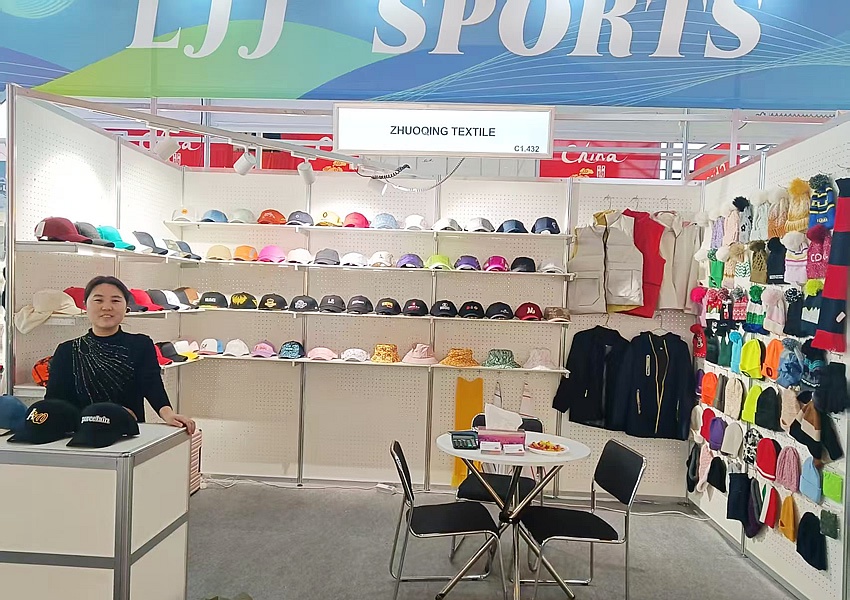
Unlike digital ads that disappear after a click, a branded hat stays visible as long as someone wears it. That physical presence creates repeated, organic exposure at trade shows, conferences, sports events, and outdoor festivals.
This guide breaks down the top three marketing goals achieved by promotional event hats, how to measure them, and how to choose the right hat for maximum ROI.
Goal 1: Accelerating Brand Awareness at High-Exposure Events
Direct answer: Promotional event hats increase brand awareness because they function as mobile billboards worn by real people. A single hat can be seen hundreds of times at a trade show, conference, or sports event, creating repeated impressions without ongoing ad spend.
Why Event Hats Build Brand Awareness
Digital ads vanish after a click. A hat stays visible as long as it is worn. Every person wearing your branded hat becomes a walking advertisement. At a busy trade show, one hat might be seen by hundreds of attendees. Over its lifetime, a single branded garment can generate thousands of impressions.
Industry estimates suggest that a single branded item can generate over 3,000 brand impressions over its lifetime [Source: PPAI / ASI / Event Marketer]. For a corporate buyer, this means a one-time investment yields repeated exposure without recurring costs.
What Makes a Hat Effective for Awareness
Durability: Logos and colors must survive repeated washing and outdoor use.
Visibility: High-contrast colors and clear logo placement increase recall.
Wearability: People wear hats they actually like. Style matters.
Versatility: Bucket hats for summer, knitted hats for winter, performance caps for sports.
Brand alignment: Pantone color matching and custom tags make the hat feel like a natural extension of your brand.
How to Measure Brand Awareness from Hats
Number of hats distributed
Estimated impressions per event
Social media mentions and hashtag usage
Post-event brand recall surveys
Website traffic from event-specific landing pages
Goal 2: Strengthening Customer Loyalty Through Useful, Quality Giveaways
Direct answer: Promotional event hats strengthen customer loyalty by providing practical, daily-use value. A well-made hat protects from sun or cold, becomes a staple item, and reinforces a positive brand connection every time it is used.
Why Quality Drives Retention
Customer retention is often more cost-effective than acquisition. Research from [Source: Harvard Business Review / HubSpot] shows that increasing retention by 5% can increase profits by 25% to 95%.
A high-quality hat signals that you care about your customers’ experience. Cheap items often end up in the trash. A comfortable, well-stitched hat becomes part of someone’s wardrobe. That perceived value increases appreciation for your company.
Loyalty-Building Tactics
Personalization: Offer different colors or styles for different customer segments.
Thank-you gifts: Use hats as rewards for loyal clients or membership packages.
Unboxing experience: Branded packaging elevates perceived value before the hat is worn.
Conversation starter: When someone compliments the hat, it naturally leads to a discussion about your brand.
How to Measure Loyalty Impact
Repeat purchase rate
Customer lifetime value (CLV)
Referral rate
Net Promoter Score (NPS)
Social media tags and user-generated content
Goal 3: Generating Tangible Leads with Trackable Brand Extensions
Direct answer: Promotional event hats generate leads when they are used as a reward for engagement and paired with trackable elements like QR codes, custom URLs, or unique discount codes. This turns a passive giveaway into an active lead-generation tool.
Turning Hats into Lead-Generation Assets
Instead of handing hats out randomly, use them as a reward for engagement. For example, offer a hat to visitors who provide their contact information at your booth. You can also include a QR code on the hat or tag that leads to a landing page. This allows you to track scans, visits, and conversions.
Another effective strategy is a social media contest where participants post a photo wearing the hat with a specific hashtag. This generates leads and amplifies reach. You can then collect user-generated content for future campaigns.
ROI Calculation Example
Case Example
A B2B client ordered 500 embroidered caps for a trade show. A QR code on the tag led to a landing page. The campaign generated 38 scans, 12 qualified leads, and 3 meetings. The client repeated the order for two more events.
How to Measure Lead Generation
QR code scans
Landing page visits
Form submissions
Cost per lead
Lead-to-customer conversion rate
ROI
How to Choose the Right Promotional Hat for Maximum ROI
Selecting the right hat style and quality directly impacts your ability to achieve the three goals above. Decision-makers should evaluate material, fit, and customization options before ordering.
Material Selection
Fit and Customization
Adjustable straps for broader fit ranges
Lightweight materials for outdoor workers
Pantone color matching for brand consistency
Custom tags, side logos, or hidden pockets for promo cards
Lead Times and Logistics
Confirm sample lead time before bulk order
Request production timeline in writing
Verify shipping terms and customs documentation
Ask about experience serving your region
Sample First
Always request a sample before placing a bulk order. Test the fabric, logo placement, and overall feel. A reliable manufacturer can send prototypes quickly so you can make an informed decision without guesswork.
Comparison Table: Promotional Hats vs Other Giveaways
Common Mistakes to Avoid
Handing out hats randomly – Use them as rewards for engagement.
Choosing cheap materials – Low-quality hats reflect poorly on your brand.
No tracking mechanism – Add QR codes or custom URLs to measure ROI.
Ignoring your target audience – Choose styles people will actually wear.
No follow-up plan – Use hats to reopen conversations with prospects.
FAQ
Are promotional event hats effective for B2B marketing?
Yes. They are especially effective at trade shows and conferences because they create repeated impressions and can be used as lead-generation rewards.
How many brand impressions can a custom hat generate?
Industry estimates suggest a single branded item can generate over 3,000 impressions over its lifetime, depending on usage and visibility [Source].
What is the best fabric for trade show hats?
Cotton twill is classic and professional. Performance fabrics with moisture-wicking properties work well for sports and outdoor events.
How do you measure ROI from promotional hats?
Use a QR code, custom URL, or discount code. Track scans, landing page visits, leads, and conversions. Compare revenue generated to total campaign cost.
What is the MOQ for custom promotional hats?
MOQ varies by manufacturer and customization. Some factories support small batch runs for testing before large orders.
How long does custom hat production take?
Sample lead time is typically [X] days. Bulk production usually takes [X] weeks, depending on quantity and customization.
Can you ship promotional hats to Europe, the Middle East, South Africa, and South America?
Yes. A mature foreign trade team can manage the full chain from raw material procurement to global shipping.
Do you offer OEM and ODM services?
Yes. OEM and ODM services allow you to align hat design with specific campaign goals, including hidden pockets, special tags, or discount codes.
About Shijiazhuang Jinling Times
Shijiazhuang Jinling Times is a custom hat manufacturer based in Shijiazhuang, China. We specialize in promotional event hats for B2B clients, including trade show caps, bucket hats, knitted hats, and performance hats.
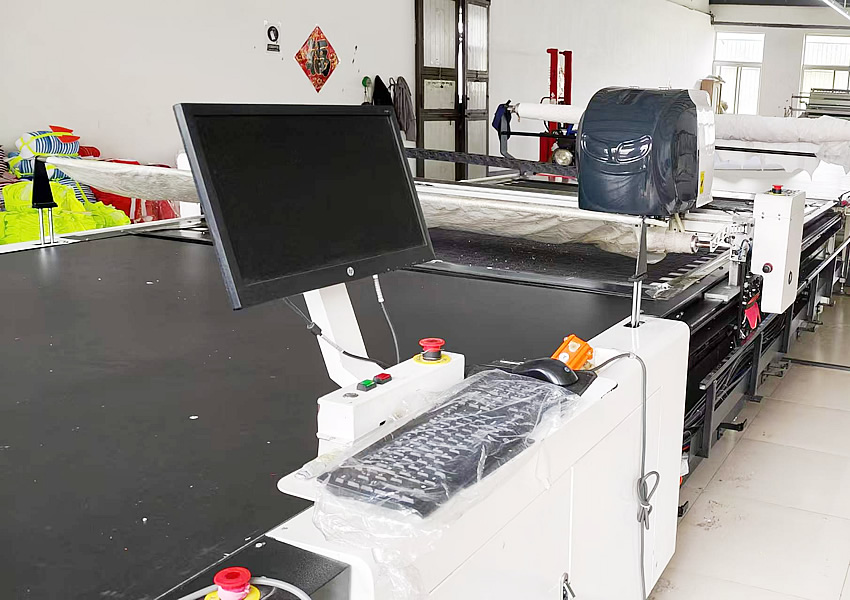
Our factory operates four high-standard assembly lines and uses automated cutting machines for precision. We maintain consistent quality across both large-scale mass production and small-order customization.
We serve clients in Europe, the Middle East, South Africa, and South America. Our services include OEM and ODM, Pantone color matching, screen printing, embroidery, and branded packaging.
Hot News

Deeply rooted in textile foreign trade for 28 years, JINLING SHIDAI continues to strengthen the core competitiveness of its source factories
Recently, Shijiazhuang Jinling Times Import and Export Trade Co., Ltd. has continued to advance its upgrades in production standardization process refinement. Since the establishment of the factory in 1997
Read Article →Fully guarantee the delivery of foreign trade orders, and efficiently and steadily advance the peak season production capacity of Jinling Times.
Entering the peak season for foreign trade shipments this year, the production workshops of Jinling Times are operating at full capacity in an orderly manner, production schedules for various
Read Article →
Need Custom Caps?
Send us your artwork and quantity — a detailed quotation within 24 hours.