


Is Adapting a Factory Scarf Design Cheaper Than Creating Your Own?
A scarf in a factory’s existing collection looks almost right: the weight suits your market, the texture feels appropriate, and the dimensions work for your customers. You only want different colors and your own label. Beside it sits your original design brief, with a distinctive pattern and a finish you have not seen elsewhere. Which route makes better commercial sense?
Is adapting a factory scarf design cheaper than developing my own? Usually, yes—especially when you keep the existing yarn specification, knitting structure, dimensions, and finishing process. However, savings can shrink quickly if your “small changes” require new materials, revised machine programming, or repeated sampling. The useful comparison is not simply factory design versus original design. It is the total cost of getting each option approved, produced, and ready to sell.
What are you actually adapting?
“Existing design” can mean several things. It might be a scarf already in regular production, an archived sample, or a showroom concept that has never been manufactured at scale. These are not equally reliable starting points.
A regularly produced scarf may already have established yarn consumption, knitting settings, finishing procedures, and inspection criteria. An old sample made from discontinued yarn offers much less certainty. Before treating a design as a low-cost option, ask whether its materials remain available and whether the factory has current production records for it.
For knitted scarves, adaptation generally falls into three levels:
- Branding changes: adding a woven label, hangtag, care label, or different packaging while leaving the scarf itself unchanged.
- Appearance changes: selecting available yarn colors, rearranging stripes, or modifying a motif within an established construction.
- Construction changes: changing yarn composition, gauge, stitch structure, dimensions, fringe treatment, or the way the scarf is assembled.
The first level usually offers the clearest development savings. The second requires closer review. At the third level, an adapted scarf may need much of the same development work as an original product.
Where the cost difference comes from
An original scarf does not necessarily require new machinery. Its extra expense often comes from engineering and validation: translating artwork into a workable knit, selecting suitable yarn, testing proportions, and correcting the first samples.
Adapting a proven design can reduce those tasks, but it does not remove every cost.
Lower development cost does not guarantee a lower unit price. An elaborate factory jacquard scarf can cost more to manufacture than a new, uncomplicated rib-knit design. Compare the actual specifications, not just the labels “existing” and “custom.”
The “small changes” that can erase the savings
A new yarn is more than a color decision
Replacing one yarn with another can change drape, stretch, warmth, stitch definition, and finished size. A scarf developed for acrylic yarn may behave differently in a wool blend, even when the nominal yarn count appears similar.
The factory may need to adjust tension, knitting settings, and finishing conditions. Composition and care labeling also need review. If a particular shade requires custom dyeing, the yarn supplier’s minimum quantity may become more important than the scarf factory’s sewing or knitting minimum.
When budget is tight, ask for suitable stock-supported yarn options before specifying a custom composition and color.
A logo may change the construction
A sewn label is usually a relatively contained modification. A knitted-in logo is a different proposition. Fine lettering may not translate clearly at the chosen gauge, while additional colors can affect knitting complexity and yarn use. Some jacquard constructions also alter thickness or the appearance of the reverse side.
Ask to see the proposed logo in a knitted swatch rather than approving it solely from digital artwork. A screen preview cannot confirm stitch definition or how the motif behaves when the fabric stretches.
Extra length or width affects more than material consumption
A longer scarf generally uses more yarn, but the consequences can extend to knitting time, finishing, folding, and packaging. Wider dimensions may affect production suitability depending on the construction and equipment.
Changes to fringe length, tassels, or decorative trims can also add manual operations. Individually modest details may become significant across an order, particularly when they require extra handling or inspection.
Compare total order cost, not just the sample fee
A low sample charge is reassuring when you are testing a new range. Still, it represents only one part of the purchasing decision. A more useful calculation is:
Comparable order cost = development and sampling + bulk production + labels and packaging + required inspection or testing + freight, duties, and other applicable import costs.
Use the same delivery terms and destination assumptions for both options. A factory-gate quotation and a delivered quotation cannot be compared directly.
Order quantity also changes the balance. Development expenses spread across more units as volume increases. On a small launch order, reusing a proven construction can make a meaningful difference to the effective cost per scarf. On a larger program with repeat orders, the initial development difference may become less important than recurring yarn and manufacturing costs.
Request a breakdown that distinguishes:
- One-time design, programming, and sample charges.
- Recurring unit prices at the quantities you are realistically considering.
- Minimum quantities by design, color, and yarn specification.
- Label, packaging, testing, and inspection charges, where applicable.
- Any sample-fee credit and the conditions attached to it.
This makes negotiations more useful. Instead of asking for a general discount, you can discuss whether retaining an existing stitch, reducing color variants, or using an available yarn would lower the cost without weakening the product.
When adapting a factory scarf design is the stronger choice
Adaptation is particularly practical when the scarf’s role is already clear. A distributor adding a dependable winter basic may value consistent hand feel and repeat availability more than an exclusive stitch pattern. A brand testing demand for a new accessory category may prefer to limit development exposure until sales justify a more distinctive range.
It also makes sense when your identity can be communicated through a focused combination of colors, labels, and packaging. A familiar ribbed scarf can still fit a brand convincingly without requiring a new construction.
The strongest candidate is an existing product that already meets most of your requirements. If you like only the general silhouette but want to replace the yarn, change the dimensions, introduce a complex motif, and redesign the edges, the cost advantage is much less certain.
Timing matters too. Reusing a validated construction can shorten development, but only if materials and production capacity are available. An existing sample is not evidence that finished stock is ready to ship.
When original development may be worth the extra work
Developing your own scarf becomes more attractive when the product itself carries the brand story. A signature motif, unusual texture, specific drape, or coordinated accessory collection may justify development work that a standard factory design cannot avoid.
Original development can also prevent compromise. If buyers expect a particular warmth, weight, or skin feel, adapting an unsuitable base may lead to repeated revisions without reaching the intended result. Starting from a clear performance and design brief can be more efficient.
There is also a repeat-order perspective. Once an original design is approved and its specifications are stable, subsequent orders may no longer carry the same development burden. Ask how the supplier retains approved samples, technical records, and knitting programs, and what would trigger redevelopment charges later.
However, custom-made does not automatically mean exclusive. Agree in writing on ownership and permitted use of supplied artwork, newly developed patterns, and technical files. For factory designs, confirm that the supplier can legitimately offer the design and clarify whether other buyers may purchase the same base.
Keep quality requirements identical in both quotations
A comparison becomes misleading if the adapted scarf is quoted with looser tolerances or less demanding materials than the original design. Set the same acceptance requirements wherever the intended product performance is equivalent.
For knitted scarves, useful checkpoints include finished dimensions under an agreed measurement method, weight, yarn composition, shade consistency, stitch appearance, edge finish, and label placement. Depending on the material, destination, and intended use, pilling, colorfastness, dimensional stability, or chemical compliance testing may also be relevant.
Approve the sample after the intended finishing process, not just directly off the knitting machine. Finishing can noticeably change softness and dimensions. Retain an approved reference sample and document tolerances so bulk inspection is based on shared criteria rather than memory.
Any required test standard or certification should be confirmed for the specific product and market. Neither factory-direct sourcing nor a familiar construction removes that responsibility.
A practical way to ask for both options
Send one brief and request two clearly defined proposals: an adaptation of the closest available factory design, and development of your preferred original version. Include target dimensions, composition preferences, intended retail positioning, estimated quantities by color, branding, packaging, destination, and required delivery window.
Then ask a revealing question: “Which of my requested changes prevents you from reusing the existing production setup?” The answer often identifies the real cost drivers faster than a headline quotation.
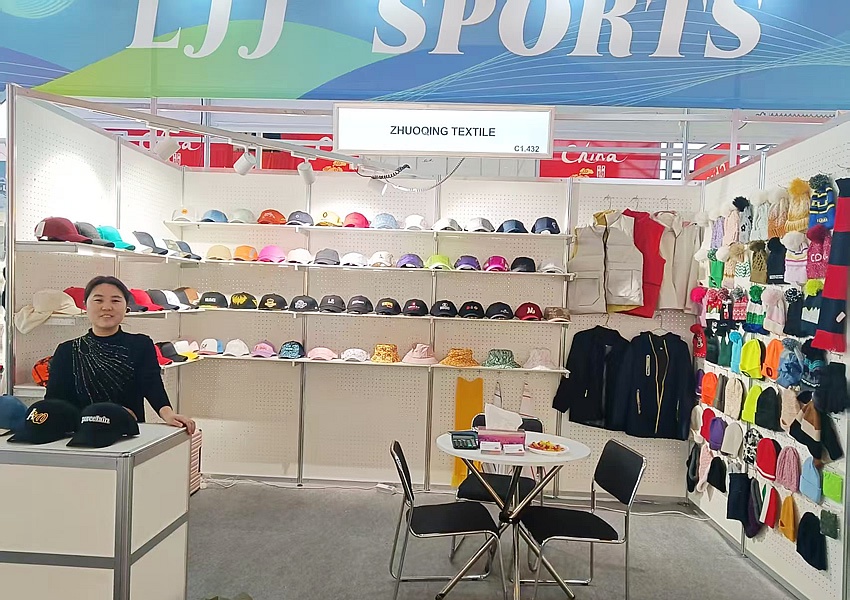
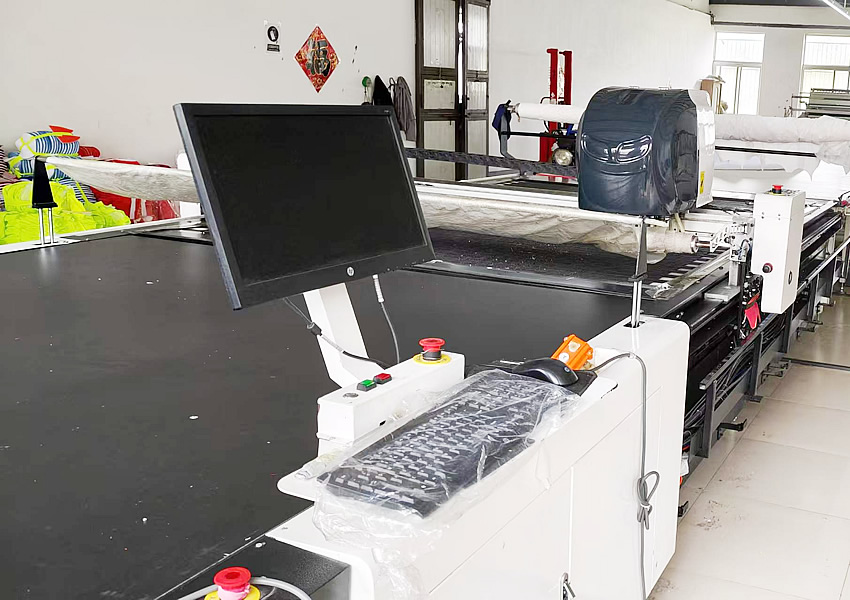
Shijiazhuang Jinling Times Import and Export Trade Co., Ltd. offers knitted scarves alongside its hat range, with small-order customization, bulk production, and OEM/ODM services. Its factory and foreign trade team provide a basis for discussing both an existing-design route and an original-development route, including sourcing, quality inspection, packaging, and export logistics. A useful proposal should explain what can be reused and what needs new development.
For most buyers, adapting a factory scarf design is cheaper when the changes remain genuinely limited. Original development becomes more compelling when distinctive design or specific performance is central to the product’s value. Choose the option with the clearest total cost, achievable specification, and repeat-order plan—not simply the lowest initial sample charge.
Hot News

Deeply rooted in textile foreign trade for 28 years, JINLING SHIDAI continues to strengthen the core competitiveness of its source factories
Recently, Shijiazhuang Jinling Times Import and Export Trade Co., Ltd. has continued to advance its upgrades in production standardization process refinement. Since the establishment of the factory in 1997
Read Article →Fully guarantee the delivery of foreign trade orders, and efficiently and steadily advance the peak season production capacity of Jinling Times.
Entering the peak season for foreign trade shipments this year, the production workshops of Jinling Times are operating at full capacity in an orderly manner, production schedules for various
Read Article →

{item.title}
{item.description}
Need Custom Caps?
Send us your artwork and quantity — a detailed quotation within 24 hours.