


Hat Quality Control Checklist: Measuring Fit, Symmetry, and Brim Shape
Hat Quality Control Checklist: Measuring Fit, Symmetry, and Brim Shape
A cap can look flawless on the inspection table yet fit poorly, sit unevenly, or lose its brim shape after packing. An effective Hat Quality Control checklist turns these risks into measurable inspection points. This guide explains how to check head circumference and crown depth, compare panel and seam symmetry, and assess brim curvature against approved samples and agreed tolerances. Whether inspecting baseball caps, bucket hats, or customized OEM orders, these checks help identify defects before shipment and reduce avoidable returns.
The key is repeatability. If the factory measures a cap under tension while the buyer measures it relaxed, both may record accurate readings—and reach opposite decisions. Inspection methods therefore belong in the product specification, not just in the inspector’s working notes.
Define the Reference Before Inspecting the Product
A sealed approval sample establishes appearance, but it cannot replace a measurement sheet. Samples can soften, stretch, or become distorted during storage. Keep the approved sample alongside a dated specification identifying measurement points, adjustment settings, tolerances, and the intended inspection condition.
There is no single dimensional tolerance suitable for every hat. A structured woven baseball cap, a soft bucket hat, and a rib-knitted beanie respond differently to handling. Buyers and manufacturers should agree acceptance limits by construction, material, size range, and intended use rather than borrowing limits from an unrelated style.
- Identify the approved style, size, fabric, lining, sweatband, closure, and brim insert.
- Define whether measurements are taken after finishing, after packing, or after a specified recovery period.
- State whether the hat is measured relaxed, on a headform, or under a defined load.
- Use dated reference photographs to show acceptable shape and borderline appearance defects.
A flexible non-stretch tape, ruler, flat surface, suitable headform, and agreed shape template cover many routine checks. Confirm that measuring tools remain legible and accurate. A headform must match the approved size and profile; an unsuitable form can make a good cap appear defective.
Measure Fit Without Stretching Away the Problem
Head circumference and adjustment range
For a woven cap, measure the internal wearing circumference along the agreed sweatband line. Follow the inside contour without pulling the tape tight or allowing it to bridge gaps. Keep the tape level and avoid compressing padding differently between pieces.
Adjustable caps need a defined closure position. Record the reference setting and verify the usable adjustment range separately. A long strap does not necessarily provide a usable fit range: the buckle may slip, the opening may distort, or the strap end may lack secure retention. Check closure engagement at the specified settings.
For stretch-fit caps and knitted hats, relaxed dimensions alone do not establish fit. Specify the extension method, applied load where relevant, duration, and recovery interval. Avoid stretching each piece “until it feels right.” That introduces operator judgment into what should be a controlled measurement.
Crown depth and wearing balance
“Crown depth” needs a drawing because it can describe different measurements. Front height measured along the surface from the lower crown edge to the apex is not equivalent to vertical height on a headform. Define the endpoints, path, and support condition explicitly.
Where fit depends on crown balance, record front, back, and side measurements. A cap can meet circumference requirements but still sit too high or lean because one section is shorter. Check the sweatband for twisting, uneven attachment, or bulky joins that reduce usable internal space.
A headform check helps reveal these interactions, but it does not establish comfort for every wearer. If comfort is a design requirement, fit trials should support product development rather than being improvised during final inspection.
Check Symmetry Against Construction Datums
Start with the intended front centerline. On a six-panel cap, this commonly follows the front seam; on a five-panel design, use the specified panel center. Do not assume the logo marks the center—it may itself be misplaced.
Place the cap on the agreed support and compare corresponding points on either side. Examine panel widths at defined heights, seam paths toward the apex, eyelet positions, and the relationship between the crown and brim. Intentional asymmetry should be documented rather than rejected automatically.
Some differences become clear only when several reference points are compared. A centered button can sit above uneven panel seams, while a correctly positioned logo can appear tilted because the crown is distorted. Record the structural defect instead of describing every imbalance as “crooked embroidery.”
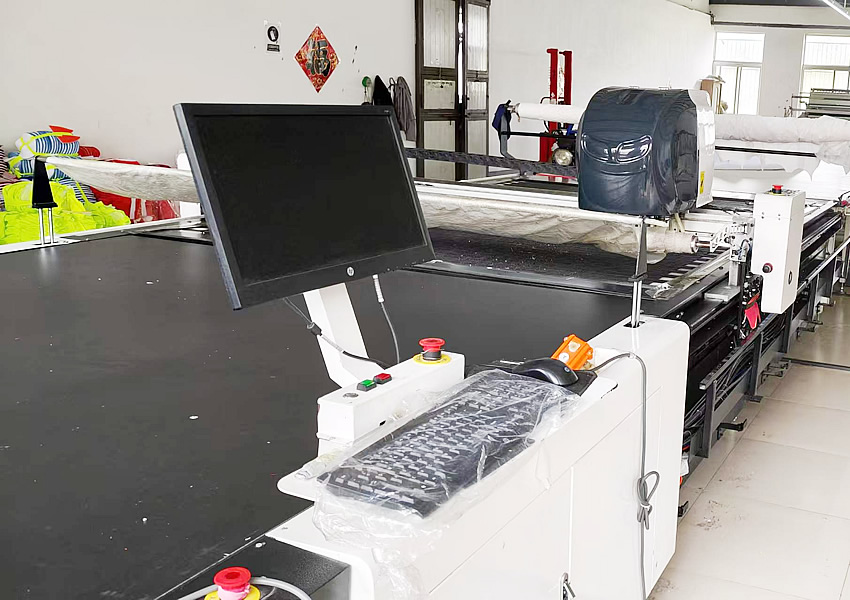
When imbalance repeats, examine cutting accuracy, fabric grain, seam allowances, differential feeding, and finishing pressure. Automated cutting and sewing equipment can support consistency, but they do not remove the need to verify settings and material behavior.
Make Brim Shape a Measurable Requirement
Brim inspection should separate dimensions from shape. Measure the center projection from the specified crown-to-brim junction to the outer edge, then compare left and right projections at matching locations. Define whether each reading follows the curved surface or represents a straight-line distance.
For a curved baseball-cap visor, an agreed profile template or fixture makes comparison more reliable than visual judgment alone. If using a chord-and-rise method, document the contact points, orientation, and measurement location. The fixture should support the brim without forcing it into the approved curve.
Look for torsion as well as curvature. One side may lift while the other drops even when the center profile appears correct. Inspect edge binding, topstitching, insert position, and the crown attachment seam for uneven tension or localized buckling.
Bucket hats require a different reference. Check brim width at the front, back, and sides, then assess the intended downward slope or drape on the approved support. A soft brim should not be judged by a rigid visor standard. Wavy edges may reflect uneven feeding, grain distortion, or finishing rather than incorrect cutting dimensions.
Do not reshape a questionable brim before documenting it. Hand manipulation or steam may conceal the condition in which the customer would receive the hat.
A Practical Inspection Record
A useful checklist captures actual readings and observations, not just ticks. The following fields make results easier to compare across inspectors, production lines, and repeat orders.
Inspect After Packing, Not Only After Finishing
Finishing can temporarily improve appearance, while tight nesting and carton compression can introduce new defects. Inspect representative pieces after removal from the actual packing arrangement. Record the elapsed recovery time before judging shape, and do not substitute an unpacked showroom sample.
If a brim recovers only after steaming, that is not equivalent to normal recovery unless the buyer has explicitly accepted the process. Likewise, a crown crease that disappears on a headform may remain visible when displayed. Acceptance should reflect the agreed delivery and presentation condition.
Where washability or shape retention after care is claimed, evaluate it using the specified care procedure and agreed test method. A satisfactory pre-shipment appearance check does not substantiate a laundering-performance claim.
Link Defects to Decisions and Corrective Action
Agree defect classifications before inspection. A fit failure that makes a size unwearable may warrant a different classification from a slight visual offset. Severity depends on function, customer requirements, and intended use—not simply on how easy the defect is to photograph.
For lot acceptance, document the sampling plan, lot definition, selection method, and acceptance criteria. If ISO 2859-1 is specified, apply the agreed plan correctly rather than treating “AQL inspection” as a guarantee that every piece conforms. Include pieces from different cartons and relevant production groups so selection does not favor the easiest stock to access.
Keep safety checks alongside dimensional inspection. Exposed sharp components, broken-needle contamination, insecure attachments, and destination-specific requirements need separate controls. Ordinary fashion headwear should not be treated as protective equipment merely because it passes fit and shape checks.
Shijiazhuang Jinling Times Import and Export Trade Co., Ltd. combines in-house hat manufacturing, four assembly lines, finishing, packaging, and export coordination. For this production model, inspection records are most useful when they trace deviations back to material batches, line settings, or packing arrangements. That allows a recurring brim twist or circumference drift to be addressed before more units reach final inspection.
Before approving the next order, settle three details: exactly where each measurement is taken, what condition the hat must be in, and which deviations trigger rework or rejection. Without those agreements, even a detailed Hat Quality Control checklist leaves too much room for disagreement at shipment.
Hot News

Deeply rooted in textile foreign trade for 28 years, JINLING SHIDAI continues to strengthen the core competitiveness of its source factories
Recently, Shijiazhuang Jinling Times Import and Export Trade Co., Ltd. has continued to advance its upgrades in production standardization process refinement. Since the establishment of the factory in 1997
Read Article →Fully guarantee the delivery of foreign trade orders, and efficiently and steadily advance the peak season production capacity of Jinling Times.
Entering the peak season for foreign trade shipments this year, the production workshops of Jinling Times are operating at full capacity in an orderly manner, production schedules for various
Read Article →

{item.title}
{item.description}
Need Custom Caps?
Send us your artwork and quantity — a detailed quotation within 24 hours.