


How to Evaluate a Lightweight Sports Cap Supplier
Choosing the right lightweight sports cap supplier involves more than comparing prices. Buyers need to assess fabric breathability, construction quality, customization options, production capacity, and delivery reliability to ensure each cap meets its intended market needs. This guide explains the key criteria to consider, from evaluating samples and quality control processes to reviewing OEM and ODM capabilities, helping brands and distributors make confident sourcing decisions.
Start with the cap’s intended use
A cap designed for a summer running collection faces different demands from one produced for a corporate golf event. Runners may prioritize ventilation, a secure fit and a sweatband that feels comfortable during sustained activity. Golf buyers may prefer a more structured crown and a finish that holds its shape. Promotional buyers may place greater weight on decoration, packing and delivery dates.
These differences should be clear before requesting quotations. “Lightweight sports cap” describes a broad category, not a complete specification. A useful brief identifies the intended activity, target customer, expected retail position, destination market and any mandatory requirements. It should also say whether the buyer wants to adapt an existing design or develop a new one.
Weight itself needs context. Fabric weight is commonly expressed in grams per square meter, while the finished cap can be weighed as a complete item. A lighter fabric does not automatically produce a lighter cap: the sweatband, visor insert, closure, labels and decoration all contribute. If low finished weight is a selling point, agree on how it will be measured and what tolerance is acceptable.
Look beyond the fabric name
Polyester and nylon fabrics are common choices for sports caps because they can be made into lightweight constructions. Yet fiber content alone tells a buyer little about how a cap will feel or perform. Yarn, weave or knit structure, fabric weight and finishing all influence the result.
A tightly woven fabric may give a clean appearance and a degree of wind resistance, but it can feel less ventilated than an open construction. Mesh panels can improve airflow, although their placement matters: a small mesh insert covered by embroidery or a lining may contribute less than expected. Very open mesh may also expose the wearer’s scalp or make decoration more difficult.
The sweatband deserves separate attention. A cap can have a breathable crown but still feel uncomfortable if the band is bulky, rough or slow to dry. Ask which material is used for the sweatband and whether it is the same on the sample and in bulk production. If a moisture-management finish is proposed, establish what performance is expected and how it will be checked after washing.
For claims such as quick drying, water repellency or UV protection, request relevant test methods and reports for the actual material or finished product, as appropriate. Do not assume that a fabric described as “performance” or “sun protective” supports a claim on its own. Confirm whether the evidence applies to the specified color, construction and production batch, and review the requirements of the destination market.
Inspect the whole cap, not just a fabric swatch
Fabric swatches help narrow down options, but they cannot show how a finished cap behaves. Request a sample with the intended crown shape, visor, closure and decoration. An attractive fabric can feel stiff once seams, backing and labels are added; a lightweight panel can lose its advantage if the visor or branding is unnecessarily heavy.
When reviewing a sample, check the following against the intended use:
- Crown and fit: Check panel symmetry, seam placement, crown depth and how the cap sits on different head shapes. Confirm the adjustable range and any size tolerances.
- Visor: Assess shape, flexibility and edge stitching. Ask what insert is used and whether the visor is intended to retain its shape or fold for packing.
- Closure: Test whether the buckle, hook-and-loop tab or other fastening holds securely and adjusts without excessive effort.
- Interior finish: Look for exposed thread ends, abrasive seam tape, uncomfortable labels and uneven sweatband attachment.
- Decoration: Examine logo position, backing material and any puckering around embroidery or transfers, particularly on thin or stretchy panels.
Handle the sample as a wearer would. Adjust it repeatedly, fold it if portability matters, and follow the proposed care instructions before checking its appearance again. This is not a substitute for formal testing, but it can reveal practical problems before a production order is placed.
Keep an approved reference sample and a written specification. Photographs are useful for recording details, but they cannot fully capture hand feel, color or fit. Agree with the supplier on which sample is the production reference and how any later changes will be approved.
Separate customization options from development capability
Many factories can add a logo to an existing cap. Fewer projects require a new pattern, but those that do need closer technical discussion. OEM arrangements often start with the buyer’s design and specifications; ODM arrangements may involve the supplier contributing an existing design or development work. The exact division of responsibility should be agreed rather than assumed from either label.
Ask to see what can be changed without altering the pattern: fabric color, mesh location, closure, sweatband, logo technique and packaging are common discussion points. Then ask what happens if the crown depth or visor profile needs to change. A pattern revision can affect fit, material usage and the time needed for another sample.
Decoration also creates trade-offs. Embroidery can provide texture but may add stiffness and require backing. A heat transfer may be lighter in some designs, although its appearance and durability depend on the material and application. The right choice depends on artwork size, fabric surface, stretch and expected care. Request a decorated sample rather than approving the logo only from a digital mock-up.
Small-order customization should be discussed at the component level. A factory may accommodate a small cap order while a particular dyed fabric, buckle color or custom label has a separate minimum. Clarify which materials are available from stock, which must be ordered specifically, and whether substitutions require written approval.
Verify production control and available capacity
Equipment and workshop size are useful indicators, but neither proves that a supplier can deliver a particular order on time. Ask who will make each part of the product, which operations are performed in-house and which are outsourced. Fabric sourcing, dyeing, printing, embroidery and testing may involve different parties. The important question is who coordinates them and resolves problems when a component falls short.
A production discussion should cover material approval, cutting, sewing, decoration, finishing and packing. Ask how the supplier checks incoming fabric for shade variation and visible defects, how panels are kept consistent during cutting, and when in-line inspections take place. For finished goods, agree on the inspection method, sampling plan, defect definitions and acceptance criteria before production begins.
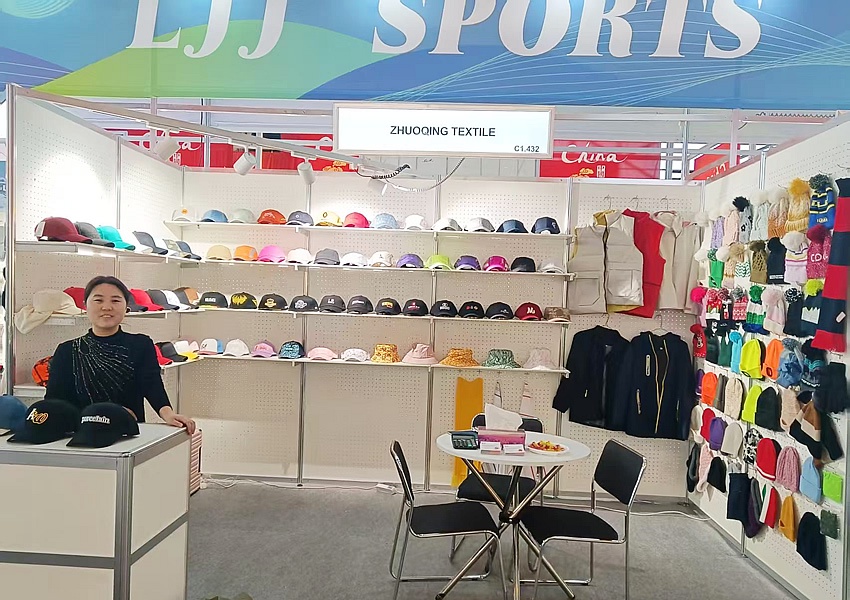
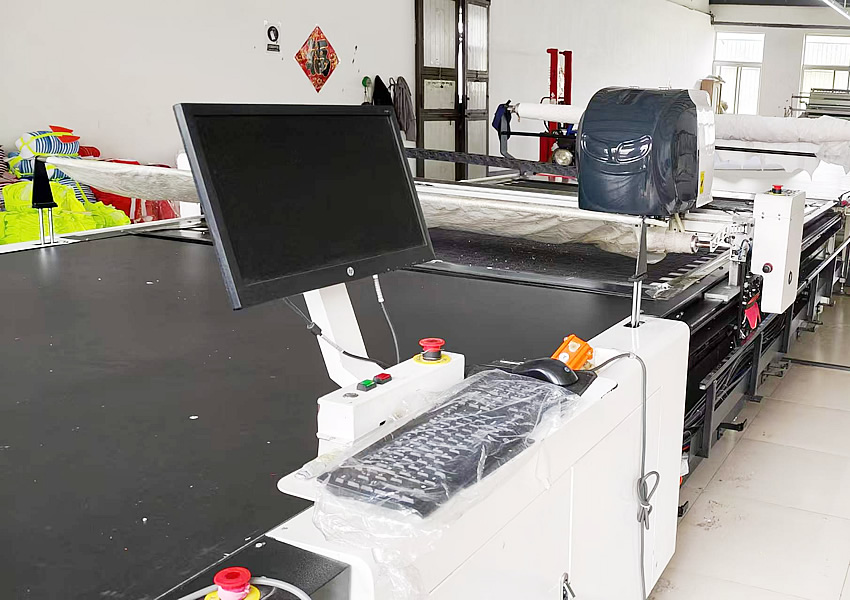
Shijiazhuang Jinling Times Import and Export Trade Co., Ltd., for example, describes an in-house factory with four assembly lines, automated cutting and sewing equipment, and facilities for ironing and packaging. Its stated services include small-order customization, mass production and OEM/ODM work. Those details provide a starting point for assessment, not a substitute for confirming capacity, material availability and inspection arrangements for a specific cap order.
A factory’s total line count does not tell a buyer how much capacity is available during a requested production window. Ask for a schedule tied to the actual quantity and product complexity, including the time needed for material procurement, sample approval and any third-party inspection. If a launch date is fixed, identify which milestones cannot slip.
Compare quotations on the same specification
A low unit price may reflect a genuine manufacturing advantage, or it may reflect a different fabric, simpler decoration or omitted services. Before comparing offers from each lightweight sports cap supplier, check that the quotations cover the same construction and commercial terms.
The comparison should identify the fabric composition and construction, sweatband, visor insert, closure, logo method, labels and individual packing. It should also specify order quantity by color and size, sample charges, tooling or development charges where applicable, payment terms, delivery location and the agreed trade term. Check whether testing, inspection, freight and duties are included or remain the buyer’s responsibility.
Pay particular attention to color. A digital reference is useful, but screen settings and fabric finishes can change its appearance. Agree on a physical color standard or approved production reference, the conditions for reviewing it and the process for dealing with shade differences between the crown, mesh, sweatband and closure.
The least expensive quote is not necessarily the lowest-cost order if it relies on an unapproved substitution or leaves critical services undefined. Equally, a higher price does not prove better quality. Ask suppliers to explain material and construction differences, then decide which features matter to the end user.
Plan for delivery, compliance and corrective action
Delivery reliability starts well before shipment. Confirm whether the quoted lead time begins at order placement, deposit receipt, material availability or final sample approval. Obtain separate dates for the pre-production sample, bulk production, inspection and handover to the carrier. For seasonal programs, leave room for corrections rather than treating the first proposed schedule as guaranteed.
The destination market may impose requirements concerning fiber labeling, country of origin, restricted substances, product claims or packaging. Requirements depend on the product, sales channel and jurisdiction. Share the intended market and relevant buyer specifications early, and establish who will arrange and pay for any required testing. A general statement that products meet international standards is not the same as evidence for a particular order.
Finally, agree on what happens if the goods differ from the approved sample. Define how defects will be documented, how quickly the parties will review them and what remedies may be considered. Clear records matter: retain the final specification, approved artwork, sample approval, inspection findings and correspondence about changes.
A practical next step is to send shortlisted suppliers the same brief and request a sample, an itemized quotation and a proposed production timeline. Compare their answers as closely as the caps themselves. A supplier that identifies limitations early and can explain how it will control the agreed details gives the buyer a firmer basis for a repeatable order.
Hot News

Deeply rooted in textile foreign trade for 28 years, JINLING SHIDAI continues to strengthen the core competitiveness of its source factories
Recently, Shijiazhuang Jinling Times Import and Export Trade Co., Ltd. has continued to advance its upgrades in production standardization process refinement. Since the establishment of the factory in 1997
Read Article →Fully guarantee the delivery of foreign trade orders, and efficiently and steadily advance the peak season production capacity of Jinling Times.
Entering the peak season for foreign trade shipments this year, the production workshops of Jinling Times are operating at full capacity in an orderly manner, production schedules for various
Read Article →

{item.title}
{item.description}
Need Custom Caps?
Send us your artwork and quantity — a detailed quotation within 24 hours.