


Does Automated Fabric Cutting Improve Cap Size Consistency?
Yes. Automated fabric cutting can improve cap size consistency by producing panels with more repeatable shapes and dimensions than a process that relies heavily on manual positioning and cutting. For a bulk order, that can reduce one source of variation between caps. It does not, however, guarantee a uniform finished fit: fabric behavior, sewing, pressing, and the adjustment system can all change the result.
The distinction matters when a shipment contains caps that look similar but feel noticeably different on the head. The first useful question is not simply whether the factory uses an automated cutter. It is whether the cut panels match an approved pattern consistently, and whether that consistency survives the remaining production stages.
Where automated cutting can make a difference
A cap is assembled from multiple components that must fit together. In a baseball cap, crown panels join along curved seams and meet the sweatband and visor. A bucket hat has its own combination of crown, side, and brim pieces. Small differences in the edges being joined can affect seam alignment or encourage an operator to stretch one piece to match another.
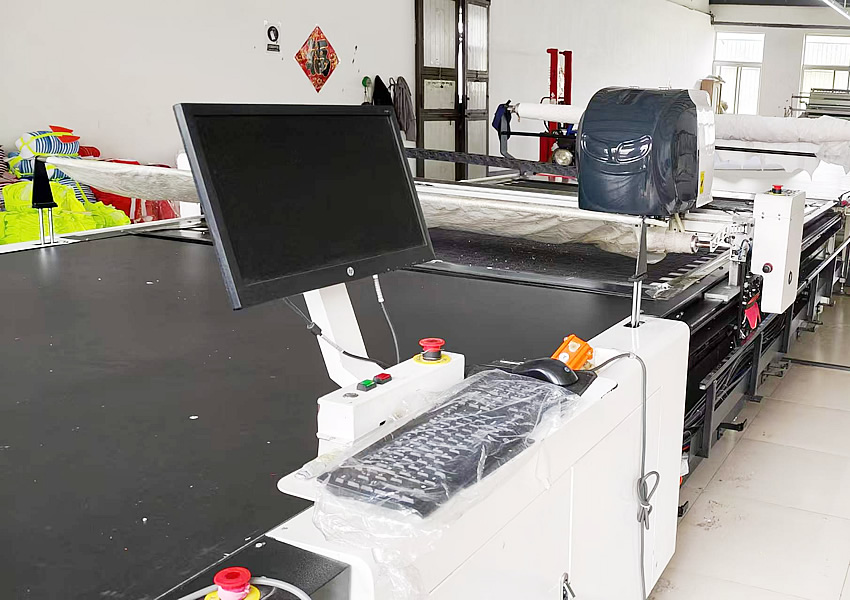
An automated cutting machine follows a digital cutting path rather than requiring an operator to trace and cut every piece individually. Once the pattern, material lay, and machine settings are correct, it can repeat that path across successive pieces. This is especially useful for curved panel edges and matching notches, where inconsistent cutting can make assembly less predictable.
Automation also helps separate two problems that are often confused: variation between pieces and an incorrect pattern. A cutter may reproduce the same panel very consistently, yet every panel can still be the wrong size if the digital pattern or scaling is wrong. Repeatability is valuable only after the pattern has been checked against the intended cap size and construction.
Manual cutting is not automatically inaccurate. Skilled operators, suitable templates, and careful inspection can produce acceptable pieces. Automated cutting is most useful when the order requires many matching components or when repeated production makes it important to reproduce an approved pattern over time. The practical comparison is between the consistency of the complete cutting processes, not simply between a machine and a person.
What the machine cannot correct on its own
Fabric movement during spreading and cutting
Even a precise cutting path can produce variable panels if the fabric shifts beneath it. Slippery, stretchy, curled, or uneven material may move during spreading or cutting. Excessive tension in the lay can also make a panel appear correct immediately after cutting but change its dimensions as the fabric relaxes.
Layer height matters as well. If too many layers are cut at once for the material and equipment settings, pieces near the top and bottom of the stack may differ. A sensible inspection therefore compares panels from different positions in the lay, not just a convenient piece taken from the top. The appropriate number of layers depends on the fabric and cutting setup; it should be established and checked rather than assumed.
Material changes after cutting
Cotton twill, woven synthetics, stretch blends, and knitted fabrics do not all behave alike. Relaxation, heat, moisture, and finishing can alter dimensions or change how much a panel stretches during assembly. The same nominal pattern may therefore produce a different fit when the fabric or its backing changes.
Before approving a repeat order with a substitute material, compare a completed sample made from that material with the approved fit and measurement specification. Checking the cut panel alone is not enough when later pressing, washing, or other finishing steps are part of production. Those steps should be consistent between the approved sample and bulk goods.
Seams, bands, and closures
Cut panels become a cap only after they are sewn together. Changes in seam allowance, uneven feeding, stretching during sewing, or inconsistent attachment of the sweatband can alter the finished circumference or shape. In a multi-panel crown, small differences can accumulate across several seams. A cap may also fit differently if the closure is attached in a different position, even when its fabric panels were cut accurately.
For adjustable caps, distinguish the cap’s constructed dimensions from the adjustment setting used during measurement. For fitted caps, there is less scope to compensate for variation with a closure, so the approved size and measurement method become especially important. In both cases, a consistent cutting process supports assembly but does not replace sewing control.
When caps vary, trace the problem backward
Start by defining the symptom. Caps that differ in head opening call for a different investigation from caps with uneven crown heights or distorted brims. Measure several finished pieces using the same method and record their size, material, production identifiers where available, and adjustment setting. A single cap that feels tight is a reason to investigate, not enough evidence to identify the cause.
- Check the finished dimensions against the approved specification. Measure the head opening and any other relevant points in the agreed position. For an adjustable cap, specify whether the closure is fully open, fully closed, or set to a defined point.
- Inspect the construction. Compare seam allowances, crown alignment, sweatband attachment, and closure placement on pieces that measure differently. Visible differences can point toward assembly rather than cutting.
- Compare cut components with the approved pattern. Check corresponding panels, including curved edges and notches, from different parts of the fabric lay. Use a consistent method that does not stretch the material while measuring.
- Review the cutting setup if panels vary. Examine pattern version, scaling, fabric alignment, lay tension, layer height, and whether the material moved during cutting. Correct the identified cause before continuing with the same setup.
- Recheck after the correction. Inspect newly cut panels and completed caps. A panel-level improvement must still be confirmed in the finished product.
When panels match the pattern but finished caps do not match each other, adjusting the cutter is unlikely to solve the problem by itself. Focus instead on where dimensions change during assembly or finishing. Conversely, consistently sewn caps made from inconsistent panels may show the same variation that existed before sewing.
Set a measurement standard before production
“One size” or “standard fit” does not tell a factory enough to control size consistency. A useful specification identifies the intended size or size range, measurement points, measurement method, and acceptable tolerances. It should also state the material and construction associated with the approved sample. Without those details, two parties may measure the same cap differently and reach different conclusions about whether it is acceptable.
For circumference, agree on where the tape follows the cap and whether the sweatband is included in the measurement. Do not stretch the opening during one check and leave it relaxed during another. Crown height and brim dimensions should likewise be measured between defined points, with the cap positioned consistently. Tolerances should be agreed for the particular design and material rather than copied from an unrelated product.
An approved physical sample is useful for assessing shape and fit, but it should not be the only reference. A written measurement sheet makes it easier to distinguish an approved design feature from an unintended variation. Record the pattern version connected to the sample, especially when the design has been revised after an initial fitting.
Use checks at more than one production stage
A practical control plan follows the cap from fabric to finished item. Before bulk cutting, confirm that the correct material and pattern version are in use. Check representative cut pieces against the pattern and compare pieces across the lay. During sewing, inspect an early group of assembled caps for seam alignment, head-opening dimensions, and closure placement before a larger quantity is completed.
Finished-product sampling remains necessary because the buyer receives caps, not loose panels. Measurements should be taken after the relevant finishing operations and under the agreed conditions. Sampling should cover different portions of the production run where practical, rather than only pieces selected together at the end. The inspection plan and acceptance criteria should be agreed in advance; a sample provides evidence about the pieces inspected, not a guarantee that every cap is identical.
Keep cut-panel and finished-cap observations separate. If finished measurements drift while panel measurements remain stable, the records narrow the search toward sewing or finishing. If both drift together, fabric preparation, pattern control, or cutting deserves closer attention. This distinction makes corrective action more useful than merely asking for “better quality.”
Questions to ask before approving an order
Equipment lists can indicate production capability, but they do not show whether a particular cap will fit consistently. Ask the manufacturer to explain the controls used for the proposed design and fabric:
- How is the approved digital pattern identified, and how are revisions kept separate from older versions?
- Are cut panels checked from different positions in the fabric lay, particularly when the material stretches or shifts?
- Which finished dimensions are measured, at what stage, and against what agreed tolerances?
- How are closure settings and measurement positions standardized for adjustable caps?
- What happens when the bulk fabric, trim, or finishing process differs from the approved sample?
For a repeat order, retain the approved measurement sheet and sample reference along with the pattern revision and material details. If the next batch uses a different fabric, do not assume the previous fit will transfer unchanged. A new production sample and comparison against the agreed measurements can reveal whether the pattern or process needs adjustment before bulk cutting.
Automated cutting is therefore a useful control point, not a stand-alone fit guarantee. Its contribution is clearest when accurate panels are verified against the right pattern and followed through with consistent sewing, finishing, and finished-cap measurement.
Hot News

Deeply rooted in textile foreign trade for 28 years, JINLING SHIDAI continues to strengthen the core competitiveness of its source factories
Recently, Shijiazhuang Jinling Times Import and Export Trade Co., Ltd. has continued to advance its upgrades in production standardization process refinement. Since the establishment of the factory in 1997
Read Article →Fully guarantee the delivery of foreign trade orders, and efficiently and steadily advance the peak season production capacity of Jinling Times.
Entering the peak season for foreign trade shipments this year, the production workshops of Jinling Times are operating at full capacity in an orderly manner, production schedules for various
Read Article →

{item.title}
{item.description}
Need Custom Caps?
Send us your artwork and quantity — a detailed quotation within 24 hours.