


When do promotional event hats deliver better brand visibility?
When Do Promotional Event Hats Deliver Better Brand Visibility?
Promotional Event Hats deliver stronger brand visibility when they are designed to be worn after the event, not merely handed out during it. A cap with a clear logo may create a momentary impression at a trade show, but a comfortable, well-fitted hat can continue placing that logo in public settings for months. That difference matters when a promotional program is being evaluated as a brand asset rather than a short-lived giveaway.
For a business buyer, the question is rarely just whether to put a logo on a hat. The practical question is whether the selected product suits the audience, event environment, brand position, customization method, and delivery schedule. A poorly matched hat may be inexpensive per unit but offer little return in actual wear. A better program starts by treating headwear as an apparel item with fabric, construction, fit, and use conditions—not simply as a printed promotional surface.
Visibility Improves When the Hat Has a Reason to Be Worn
The strongest promotional hats solve a small but real user need. At an outdoor sports event, a structured baseball cap or lightweight sports cap can offer shade and help manage sweat. At a summer festival, a bucket hat may be more appropriate because it provides broader coverage and has a more relaxed visual language. For winter campaigns, knitted hats and scarves offer practical seasonal value. When the product fits the moment, recipients are less likely to leave it behind or discard it after the event.
This is why event format matters. A hat chosen for a corporate golf day may not work for a technology conference, and a premium embroidered cap intended for distributor gifts may be excessive for a high-volume public sampling campaign. Better visibility is often achieved through relevance, not through adding more decoration. The wearer needs to feel that the item belongs in their wardrobe or activity.
It is also useful to distinguish between event visibility and post-event visibility. During an event, nearly any coordinated headwear program can make staff, volunteers, or participants easy to identify. Afterward, only hats with acceptable comfort, styling, and durability tend to remain in regular use. If the campaign objective includes long-tail exposure, product quality deserves more weight in the purchasing decision.
The Fabric Decision Shapes Both Perception and Performance
In promotional headwear, fabric is not a back-end production detail. It directly affects how the hat feels, how it holds its shape, how the logo appears, and whether the item still looks presentable after repeated wear. Cotton-based fabrics are often considered for their familiar hand feel and casual appearance. Polyester and performance-oriented fabrics may be more suitable where quick drying, lighter weight, or outdoor activity is central to the event. Blended fabrics can offer a balance of texture, durability, and easier care, although the right composition depends on the desired construction and decoration process.
Fabric weight and structure should be assessed alongside fiber content. A light fabric can be appropriate for warm-weather promotions but may need reinforcement or a suitable front panel structure to support embroidery. A heavier twill may communicate a more substantial feel, yet it may be less comfortable in hot climates. For knit hats, yarn selection, gauge, stretch recovery, and the finishing of the cuff influence both fit and logo presentation.
Color consistency is equally important. A brand color that appears accurate in a digital proof can vary in appearance across fabrics, dye lots, lighting conditions, and logo techniques. For a program where brand identity is tightly controlled, buyers should request material swatches or pre-production samples where practical. This is especially relevant when hats, scarves, uniforms, and other campaign materials need to look coordinated at the same event.
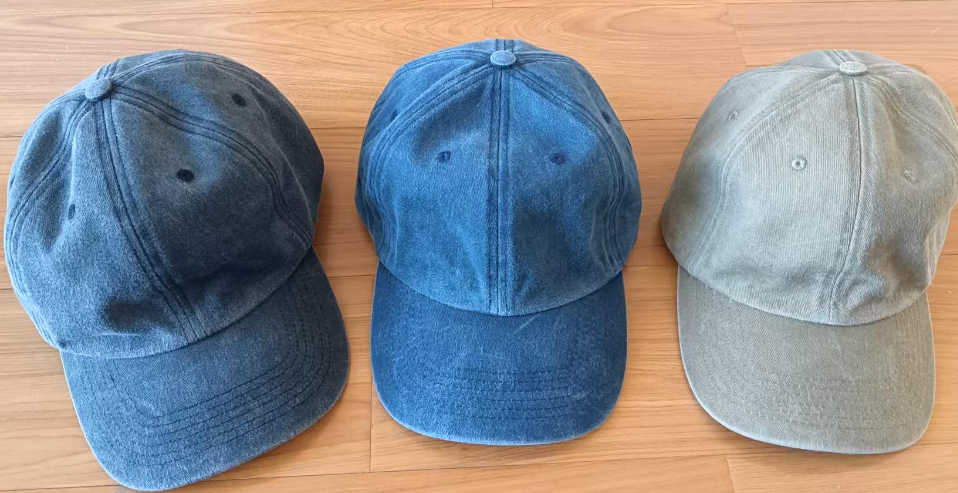
Choosing a Fabric Direction by Event Use
Logo Placement Should Respect How People Actually See a Hat
A front logo is usually the default because it is the most visible during face-to-face interaction. Yet the front panel is not automatically the best solution for every artwork. Fine text, intricate gradients, narrow lines, and small emblem details can lose clarity once translated into embroidery, woven labels, patches, or printing. The decoration technique should be selected after reviewing the design at actual production size, not only on a screen.
Embroidery can provide texture and a durable, elevated look, particularly on structured caps and heavier fabric. However, it has limitations for highly detailed graphics or very small lettering. Printed decoration may suit bold graphics and certain fabric types, but durability, color behavior, and the final surface feel should be checked. Woven labels, rubber patches, leather-like patches, and appliqué details can create a more understated branded appearance when a large front logo would feel too promotional.
Placement can also be distributed rather than concentrated. A smaller front mark paired with a side detail, rear embroidery, inner tape message, or custom closure may preserve brand recognition without making the hat feel like event merchandise. This approach is especially useful for premium gifting, retail-adjacent promotions, and brands that want recipients to wear the item in everyday settings.
Fit Is an Often-Underestimated Visibility Variable
A cap that does not fit comfortably does not travel far. For general distribution, adjustable closures reduce sizing risk, but the closure itself should match the expected use. Hook-and-loop closures are convenient for broad event distribution. Metal buckles, fabric straps, snapbacks, elastic elements, or fitted constructions each create a different impression and user experience. The choice should reflect audience preference, price point, and the intended silhouette rather than a default factory option.
Crown profile also affects acceptance. Some audiences prefer a structured, higher-profile cap, while others are more likely to wear a softer, lower-profile form. Brim curvature, inner sweatband, seam finishing, and panel alignment are less visible in a quotation sheet but highly noticeable to the wearer. These details explain why two products with similar logos and apparent specifications can produce very different post-event use rates.
For this reason, a physical sample can be more valuable than a long list of visual options. It allows internal teams to assess not just the branding, but fabric hand feel, shape retention, stitching quality, decoration clarity, and packaging suitability. Where multiple departments are involved, a sample also gives marketing, procurement, and event operations a shared reference point before production begins.
The Procurement Risk Is Often in Execution, Not Design
Promotional Event Hats are frequently ordered against immovable dates: exhibition opening days, tournament schedules, product launches, dealer meetings, or seasonal campaigns. A design can be approved quickly, but delays may still arise from fabric confirmation, color matching, artwork revisions, sample approval, decoration setup, packaging requirements, inspection, or export documentation. Evaluating a supplier therefore requires looking beyond the initial unit price and nominal lead time.
The most useful supplier conversations begin with a complete brief: intended event date, destination market, quantity range, product style, preferred materials, artwork files, decoration method, packaging expectation, and any relevant country or regional compliance requirements. Requirements should not be assumed. If the buyer needs particular test reports, labeling details, restricted-substance controls, or packaging specifications, these should be confirmed against the applicable project and destination before production is released.
Quality control should cover more than a final visual check. It may include incoming material review, checks during cutting and sewing, confirmation of logo placement and color, finished-product sampling, carton verification, and shipping documentation. The right inspection points depend on the product, but a defined process reduces the risk of discovering issues only after goods arrive at the event location.
What a Capable Manufacturing Partner Changes
For programs requiring both customization and dependable coordination, direct production capability can simplify decision-making. Shijiazhuang Jinling Times Import and Export Trade Co., Ltd. works across raw-material sourcing, manufacturing, quality inspection, export handling, logistics coordination, and after-sales support. Its hat offering includes baseball caps, bucket hats, sports caps, knitted hats, and knitted scarves, allowing the product direction to follow the event rather than forcing every campaign into one standard cap format.
Its standardized factory operation includes four assembly lines, automated cutting equipment, automated sewing machines, ironing, and packaging processes. In practical terms, this supports both larger production programs and smaller customized orders, including OEM and ODM work. The value is not simply capacity; it is the ability to keep material selection, sewing, logo application, finished-product sampling, packing, and shipment within a connected quality-control workflow.
For overseas projects, communication matters as much as factory execution. A foreign trade team familiar with different regional purchasing practices can help clarify specifications early, coordinate samples and approvals, and align shipment arrangements with the event timeline. This is particularly relevant for buyers serving Europe, the Middle East, South Africa, South America, or multiple markets with different expectations around product presentation and documentation.
A Better Decision Framework Before Ordering
Before approving a promotional headwear project, it helps to ask a few direct questions. Will recipients genuinely wear this style in the relevant season and setting? Does the fabric support the intended comfort level and branding method? Can the logo remain clear at its actual physical size? Is the fit inclusive enough for the distribution plan? Have the sample, packaging, delivery deadline, and destination requirements been checked as one connected project?
Brand visibility is not created by logo size alone. It is created when a hat is useful, visually credible, comfortable enough to keep, and consistently produced at the required scale. The strongest programs make these decisions early, before artwork approval becomes a production commitment. That is where promotional headwear moves from being an event expense to becoming a durable piece of brand presence.
Need Custom Caps?
Send us your artwork and quantity — a detailed quotation within 24 hours.