

What Is the MOQ for Custom Hats at Jinling Times?
The minimum order quantity for custom hats at Shijiazhuang Jinling Times I/E Trading Co. should be confirmed for your specific design. Jinling Times offers both small-order customization and bulk production, but the available company information does not specify a single MOQ that applies to every hat, material, or branding method.
For a new brand, that distinction matters. You may want enough hats to test customer interest without filling a stockroom. A distributor may need several colors, while a promotional buyer may need one design delivered for an event. Each requirement changes how the order needs to be assessed.
The most useful question is therefore not simply “What is your minimum?” It is “What is the minimum for this hat, with this fabric, logo, color breakdown, and delivery requirement?” Here is how to get an answer you can use for budgeting and purchasing.
What Jinling Times’ Small-Order Capability Means for Buyers
Jinling Times manufactures baseball caps, bucket hats, sports hats, knitted hats, and related knitted accessories. Its production capabilities include small-order customization, large-scale manufacturing, and OEM/ODM services. This gives buyers a basis for discussing trial orders as well as larger purchasing programs.
However, small-order customization should not be interpreted as a guarantee that every design is available at any quantity. A cap made with an available fabric and a straightforward logo presents different sourcing and production requirements from a fully developed style with custom-dyed material, special hardware, and multiple branded details.
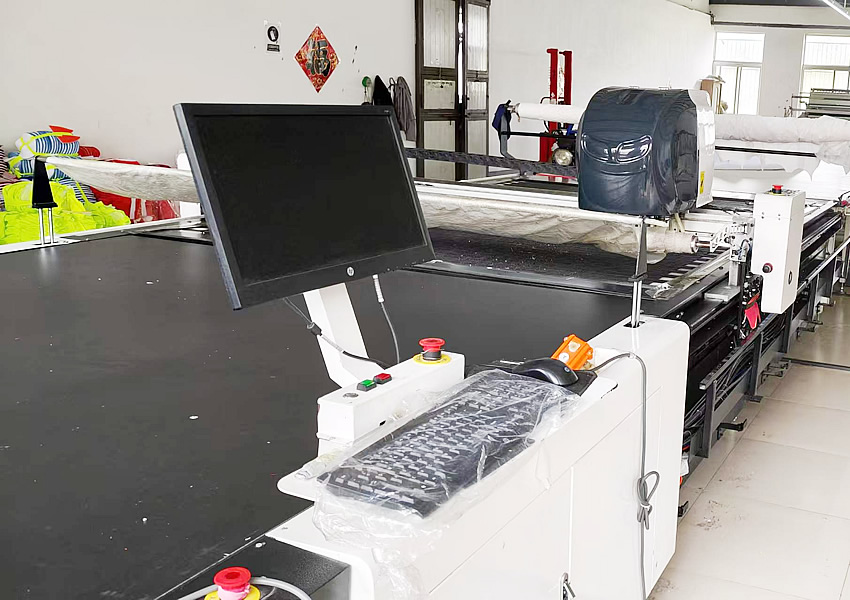
The company has an independent production factory, four assembly lines, automated cutting equipment, and sewing machinery. Those resources support manufacturing, but they do not establish a universal minimum. Fabric availability, component procurement, and production setup still need to be considered for each inquiry.
For buyers, the practical takeaway is straightforward: ask about the lowest feasible quantity for your exact specification, then compare it with the quantity that offers a sensible unit cost. These may not be the same number.
Before Comparing MOQs, Check What the Minimum Applies To
A quotation can look attractive until the order breakdown is clarified. A minimum may apply to the whole purchase, each hat style, each color, or each logo variation. Without that detail, it is difficult to calculate your actual inventory commitment.
If you are planning several variations, send the full breakdown at the beginning. “One hat style in three colors with the same front logo” is a much clearer inquiry than “custom caps.” It allows the supplier to assess the real order rather than quote against an incomplete description.
Why the MOQ Can Change Between Custom Hat Designs
Available fabric versus specially sourced material
Material selection is often an important factor. A design using an available fabric may be easier to arrange in a smaller quantity than one requiring a special weave, finish, or exact dyed shade. Material suppliers can have minimum purchasing quantities of their own, which may affect the finished-hat order.
If your launch quantity is limited, ask whether suitable available fabrics and colors can be proposed. This does not mean giving up your brand identity. It means distinguishing the details customers will notice from specifications that add purchasing complexity without improving the product’s appeal.
Decoration and branded components
Embroidery, printing, patches, woven labels, and branded closures involve different preparation requirements. A hat with one front logo is not equivalent to a design with front and side decoration, a custom back strap, and branded interior tape.
These features may affect setup costs, component minimums, or the overall production plan. Ask Jinling Times to confirm which decoration methods are suitable for your artwork and intended quantity, rather than assuming that every technique is equally practical for a small batch.
Hat construction
A baseball cap may involve a structured crown, visor construction, and an adjustable closure. A bucket hat depends on crown shape, brim dimensions, and fabric behavior. Sports hats may need particular attention to weight, ventilation, and performance materials. Knitted hats involve yarn selection, gauge, stretch, and finishing.
Because these products are made differently, the MOQ for one category should not be treated as the standard for another. Even two baseball cap designs can have different sourcing requirements if their construction and components differ substantially.
Packaging and finishing requirements
Custom hangtags, individual retail packaging, labels, and barcode application should be included in the initial discussion. They may have separate procurement or processing requirements. A hat order that meets the factory’s production minimum may still need adjustments if its packaging components require a larger purchase.
A Smaller Order Is Useful—But Compare the Whole Cost
For a first collection, ordering fewer hats can reduce exposure to unsold stock. That flexibility has real value, especially when you are still learning which colors and styles customers prefer. Yet the lowest available quantity is not automatically the best purchasing decision.
Production setup and sampling costs are spread across fewer pieces in a small batch. Freight and other shipment-related expenses may also represent a larger share of the cost per hat. A lower unit price at a higher quantity, meanwhile, is only beneficial if the extra stock is likely to sell.
Ask for a comparison between your intended trial quantity and one or two larger options. Review:
- The total product cost, not just the quoted price per piece.
- Sampling and any separate setup charges.
- Packaging, freight, and applicable import costs.
- The number of colors and sizes you would need to hold.
- Your expected selling period and realistic demand.
A simple approach is to compare the estimated landed cost per saleable hat alongside the total cash commitment. Keep the delivery term consistent when reviewing quotations, and check which expenses remain outside the supplier’s price.
How to Make a First Order More Practical
If you are concerned about meeting the minimum, start by identifying which specifications are essential. Your logo may be non-negotiable, while a custom closure or unusual packaging format may be optional for the first run.
One focused design can be easier to evaluate than a collection split across many variations. Consider asking whether an existing hat construction can be customized with your branding, whether available material colors are suitable, and whether the same logo can be used across the proposed range. Each option must still be confirmed with Jinling Times.
For example, a startup considering several cap shapes could begin by comparing samples and choosing one construction before requesting production pricing. A promotional buyer might prioritize a clear embroidered logo and a dependable delivery plan over multiple decorative details. These choices keep the order aligned with its purpose.
Avoid removing specifications simply to reach a smaller quantity if doing so weakens the product you need. The goal is not the smallest order at any cost; it is a manageable order that still represents your brand appropriately.
What to Send Shijiazhuang Jinling Times I/E Trading Co.
A detailed inquiry makes it easier to confirm a relevant MOQ and reduces repeated questions. You do not need a complete technical pack to start, but clear references and an honest description of your requirements are valuable.
- Hat type: Baseball cap, bucket hat, sports hat, or knitted hat.
- Design reference: Photos, sketches, or a technical drawing showing the intended shape.
- Material preference: Fabric or yarn type, desired feel, and any performance requirements.
- Color breakdown: Each proposed color and its intended quantity.
- Branding: Logo artwork, approximate dimensions, placement, and preferred decoration method.
- Size requirements: Adjustable fit, adult or children’s sizing, or a specific size range.
- Finishing: Labels, closures, hangtags, and packaging expectations.
- Delivery details: Destination country and required arrival date.
- Order objective: Trial launch, retail collection, promotional campaign, or repeat procurement.
You can frame the central request like this:
Please confirm the MOQ for the attached custom hat design, including whether it applies per style, color, or logo. Our intended order breakdown is listed below. Please also advise on sampling, suitable material options, production timing, and pricing at our target quantity and a higher quantity.
If you have a strict budget or maximum inventory limit, mention it. The team can then assess whether adjustments to the specification are worth discussing instead of quoting a design that does not fit your purchasing plan.
Confirm These Details Before Approving Production
Does a sample replace the production minimum? No assumption should be made here. Sampling and bulk production serve different purposes. Confirm sample availability, cost, timing, and what the sample will represent before proceeding.
Can colors or logos be mixed? Ask explicitly. An agreed total quantity does not necessarily mean unrestricted variations. Record the approved breakdown in the quotation or order documentation.
Will a repeat order have the same MOQ? Check again when reordering. Previous artwork or specifications may remain useful, but material availability, component sourcing, and production conditions can change.
Once the commercial details are clear, align on the approved specifications and quality checks. Jinling Times describes quality control across material selection, manufacturing, finished-product sampling, packing, and shipping. Buyers should translate their expectations into reviewable details: logo placement, measurements, color references, stitching, and packaging instructions. Any destination-specific labeling or compliance requirements should also be identified before production.
Get an MOQ That Matches the Order You Actually Need
Jinling Times’ small-order and bulk manufacturing capabilities make it relevant to buyers at different purchasing stages. However, there is no verified universal MOQ in the supplied company information. The quantity needs to be established against your chosen hat, materials, branding, and order breakdown.
Send Shijiazhuang Jinling Times I/E Trading Co. a clear design brief and ask for the minimum per style, color, and logo, together with sampling terms and quantity-based pricing. That gives you more than a number: it gives you a workable basis for deciding how much to order, what to simplify, and how to move your custom hat project forward.
Hot News

Deeply rooted in textile foreign trade for 28 years, JINLING SHIDAI continues to strengthen the core competitiveness of its source factories
Recently, Shijiazhuang Jinling Times Import and Export Trade Co., Ltd. has continued to advance its upgrades in production standardization process refinement. Since the establishment of the factory in 1997
Read Article →Fully guarantee the delivery of foreign trade orders, and efficiently and steadily advance the peak season production capacity of Jinling Times.
Entering the peak season for foreign trade shipments this year, the production workshops of Jinling Times are operating at full capacity in an orderly manner, production schedules for various
Read Article →

{item.title}
{item.description}
Need Custom Caps?
Send us your artwork and quantity — a detailed quotation within 24 hours.