


What Drives Custom Textile Manufacturing Costs for Small Apparel Orders?
Small apparel orders cost more per unit because development work, material commitments, and production setup are spread across fewer finished pieces. In Custom Textile Manufacturing, the largest cost increase often comes from the combination of low quantity and high specification variety: several colors, custom fabric, multiple sizes, or detailed decoration within the same order. A lower quoted sewing price can still lead to a higher total purchasing cost once sampling, unused material, packaging, inspection, and freight are included.
The useful starting point is a quote that separates one-time charges from recurring production costs and identifies exactly what the price includes. This makes it possible to distinguish expenses that disappear on an unchanged repeat order from those that return with every shipment.
The order quantity on paper is not always the production quantity that matters
A single order can contain several separate production runs. Different fabrics require separate sourcing and cutting arrangements; embroidery designs need their own programming; knitted constructions require machine adjustments. Dividing a small order among many combinations reduces the quantity available to absorb each setup cost.
Color splits are particularly easy to underestimate. An order using one stocked fabric in several sizes has a different cost structure from an equally sized order using several custom-dyed fabrics. In the second case, every color introduces a separate material commitment and shade approval process. The total finished-piece quantity alone does not explain the difference.
Size variation also affects fabric utilization. Cutting layouts combine pattern pieces to use the available fabric width efficiently. A balanced size assortment might fit a layout better than a concentration of larger sizes, although the outcome depends on pattern geometry. Fabric consumption estimates therefore need the actual size breakdown, usable fabric width, and cutting allowance.
The most meaningful quantity is the quantity sharing the same materials and production setup. Consolidating styles around a common base fabric or trim can reduce fragmentation while preserving selected visible differences.
Material minimums create costs beyond the fabric inside each piece
Fabric mills, dyeing facilities, and trim sources have their own minimum order quantities. These minimums do not necessarily match the minimum finished-goods quantity offered by a sewing factory. A small production order can be accepted while still requiring payment for more fabric or yarn than the finished pieces consume.
Stock materials reduce this exposure when their composition, weight, color, and finish meet the specification. Custom development introduces additional commitments, including color trials, finishing adjustments, and bulk material approval. A readily available shade and a precisely matched custom shade should therefore be quoted as separate options.
Material price per meter is only part of the calculation. Usable width, shrinkage, defects, directional patterns, and cutting waste determine how much purchased material becomes acceptable product. A cheaper narrow fabric can cost more per finished piece than a wider alternative if the cutting layout wastes more material.
For knitted products, compare yarn composition, yarn count, finished weight, stitch structure, and dimensions together. Reducing yarn weight without considering structure can change stretch recovery, coverage, or warmth. A quote based on a lighter construction is not equivalent merely because its appearance is similar in a photograph.
Residual material needs an explicit arrangement. The quotation should establish whether unused fabric remains available for repeat production, how storage is handled, and whether its cost has already been paid. Retained material only creates future value when later orders can use the same specification and the material remains suitable.
Sampling costs depend on how much remains undecided
A sample translates a design into a repeatable construction. Its cost includes pattern work, material sourcing, decoration preparation, machine setup, and the time required to evaluate the result. For a short production run, these charges represent a larger share of the total order value.
Incomplete specifications increase development work. A reference photograph does not establish fabric weight, seam construction, finished measurements, adjustment hardware, or logo placement tolerances. When these details are settled through successive samples, each revision adds labor and can delay material purchasing.
Separate fit and construction approval from color and decoration approval where practical. A prototype made from substitute fabric can establish shape, but it cannot confirm the shrinkage, surface appearance, or sewing behavior of the final material. Bulk production needs approval against the attributes that actually determine acceptance.
Sample fees also require clear treatment in the quotation. Identify which development activities are included, whether revisions carry additional charges, and whether any fee is credited against production. An unchanged repeat order can reuse existing patterns or embroidery files, but a change in dimensions, fabric behavior, or decoration technique may require renewed development.
Construction and decoration determine the labor content
Two pieces with similar silhouettes can require different amounts of production time. Extra panels, curved seams, lining, binding, reinforced stitching, and concealed attachments add operations. They also create more points where alignment must be controlled. Small runs provide fewer opportunities to spread adjustment time across continuous production.
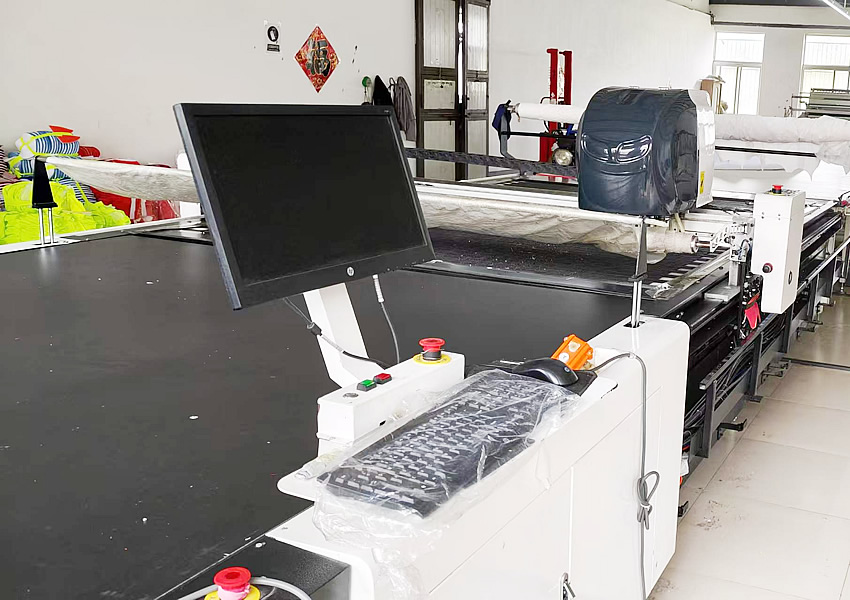
Automated cutting and sewing equipment improve particular operations, but their benefit depends on the construction. Material handling, positioning, assembly, pressing, and final finishing still contribute to cost. Equipment availability alone does not establish how economical a short run will be.
Decoration complexity should be assessed on the production artwork. Dense embroidery can distort a lightweight fabric unless the construction and backing support it. Very fine printed details require a suitable process and substrate. Removing a small visual feature sometimes reduces preparation substantially; reducing the finished piece count does not remove that preparation.
Quality requirements change the quote when acceptance is measurable
Quality costs become easier to compare when requirements describe observable results. Finished measurements need tolerances. Color approval needs an agreed reference and viewing conditions. Decoration needs placement limits and an acceptable appearance. Without these details, similar quotations can represent different assumptions about what counts as acceptable production.
Inspection effort includes incoming material assessment, production checks, and finished-product review. The appropriate scope follows the construction and intended use. Stretch recovery matters for a close-fitting knitted item; seam security and adjustment function matter where hardware is attached. Testing unrelated properties adds expense without improving the purchasing decision.
Some verification costs attach to a material, color, or construction rather than to each finished piece. Adding variants can therefore increase testing costs even when the total order quantity stays unchanged. Specify which tests are required, what the quotation includes, and whether existing reports cover the exact material being ordered.
A low defect allowance in the costing does not guarantee a high usable yield. Where rework is difficult, such as embroidery applied directly to a finished panel, an error can consume both material and previous labor. Early approval of placement and appearance reduces the chance that a repeated defect reaches the entire batch.
Packaging and delivery can outweigh a modest factory-price saving
Individual bags, printed labels, hangtags, inserts, and custom cartons introduce material minimums and packing labor. A small order with elaborate presentation packaging may commit to more packaging than it immediately uses. Separating standard protective packaging from optional retail presentation makes this cost visible.
Carton dimensions matter as well as shipment weight. Freight services can charge using volumetric weight when a shipment occupies substantial space relative to its mass. Compressible knitted items and structured headwear have different packing limits: excessive compression can deform a structured shape, while unnecessarily loose packing increases freight volume.
Delivery timing links back to production decisions. Late artwork approval or a delayed custom material can leave less time for transport and push a shipment toward a more expensive service. Compare quotations against the same approval schedule and delivery requirement, including whether transport time is included in the stated lead time.
Trade terms must also match. A factory collection price and a quotation including international carriage do not cover the same expenses. Origin handling, freight, insurance where required, destination clearance, applicable duties, taxes, and local delivery should be assigned explicitly. Their treatment depends on the agreed terms and destination; a freight-inclusive quote does not automatically include every arrival charge.
Compare the total commitment and the cost of an unchanged repeat
A practical comparison uses two calculations. The first is the cash required for the initial order, including development and any excess material purchases. The second is the expected cost of an unchanged repeat, with reusable development work separated from recurring charges. This prevents a quotation with low initial fees but expensive production from appearing equivalent to one with higher development charges and lower repeat costs.
Estimated landed cost per accepted piece = total attributable order cost ÷ expected accepted quantity. The numerator should include production, non-credited development, material commitments, packaging, agreed inspection or testing, and applicable delivery costs. Avoid counting an expense twice if it is already included in the finished-piece price.
If unused material is retained for a later order, show its initial cash commitment separately from the amount consumed by the current batch. Allocate it consistently when comparing alternatives, and do not assume future savings unless repeat demand and material usability are credible.
Direct factory sourcing removes intermediary charges where those charges would otherwise apply, but it does not remove dyeing minimums, development labor, or transport expenses. Its cost advantage is clearest when material choices, construction changes, and production assumptions can be discussed directly and reflected in a revised quotation.
For a small order, request a baseline quote and a limited set of meaningful alternatives: stocked material versus custom development, fewer color combinations, or simplified decoration. Keep dimensions, functional requirements, quality criteria, and delivery terms consistent. The resulting price differences reveal which specification changes actually reduce cost and which merely shift expense into another part of the order.
Hot News

Deeply rooted in textile foreign trade for 28 years, JINLING SHIDAI continues to strengthen the core competitiveness of its source factories
Recently, Shijiazhuang Jinling Times Import and Export Trade Co., Ltd. has continued to advance its upgrades in production standardization process refinement. Since the establishment of the factory in 1997
Read Article →Fully guarantee the delivery of foreign trade orders, and efficiently and steadily advance the peak season production capacity of Jinling Times.
Entering the peak season for foreign trade shipments this year, the production workshops of Jinling Times are operating at full capacity in an orderly manner, production schedules for various
Read Article →

{item.title}
{item.description}
Need Custom Caps?
Send us your artwork and quantity — a detailed quotation within 24 hours.