


Is Jinling Times a Knitted Scarf Manufacturer or Trading Company?
Is Jinling Times a Knitted Scarf Manufacturer or Trading Company?
Is Jinling Times a knitted scarf manufacturer or a trading company? The answer is both: Shijiazhuang Jinling Times I/E Trading Co. combines its own standardized production factory with a dedicated international trade team. Its business covers customized production, sourcing, quality inspection, and export coordination, rather than operating solely as an intermediary between buyers and unrelated factories.
That structure is relevant when sourcing knitted scarves for a retail collection, wholesale program, or distribution network. However, the manufacturer-versus-trader label is only the starting point. The more useful questions concern which processes the supplier controls, how specifications reach production, and who takes responsibility when a sample, shipment, or quality issue needs attention.
Why “Trading” in the Company Name Does Not Tell the Whole Story
An export-oriented company can have manufacturing operations and still use “Import and Export” or “Trading” in its business name. The name alone does not establish whether it owns production facilities, purchases finished goods, or combines both activities. Buyers need to examine the operating structure behind the quotation.
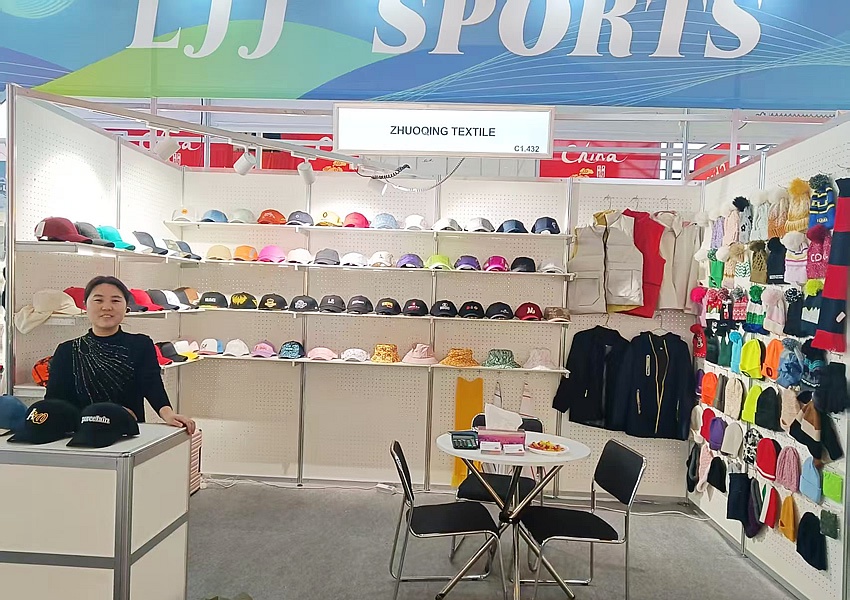
Shijiazhuang Jinling Times Import and Export Trade Co., Ltd. describes an integrated operation with an independent factory and an established foreign trade team. Its product range includes baseball caps, bucket hats, sports hats, knitted hats, and knitted scarves. Manufacturing and international sales therefore sit within the same business offering, supported by raw material procurement, inspection, logistics coordination, and after-sales service.
For a buyer, the potential benefit is a shorter communication chain. A request to adjust scarf dimensions or packaging can be coordinated through the same supplier responsible for production. That does not automatically mean every order will be cheaper or faster. Material availability, production scheduling, customization complexity, and freight arrangements still determine the commercial outcome.
What the Factory Information Establishes—and What It Does Not
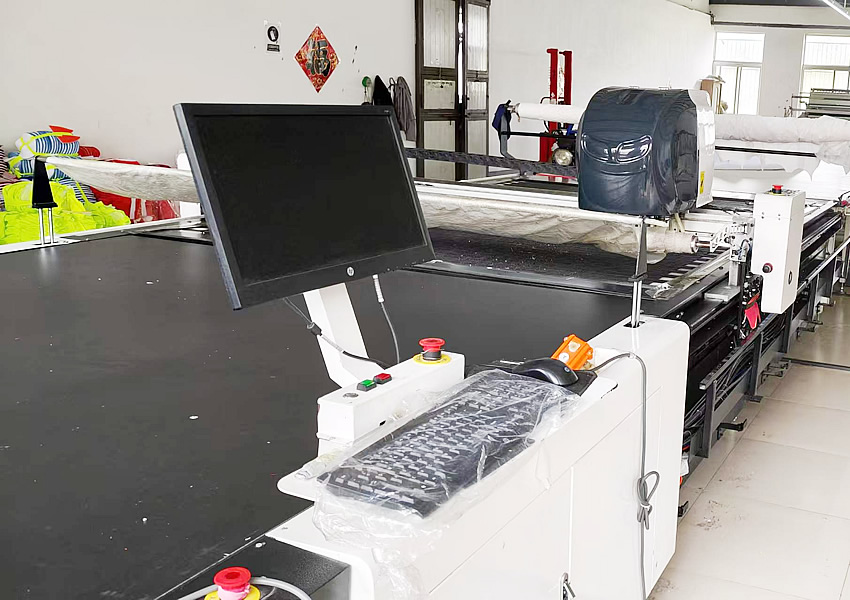
Jinling Times reports standardized production workshops, four assembly lines, automated cutting equipment, multiple automated sewing machines, and ironing and packaging operations. It also offers mass production, small-order customization, and OEM/ODM services. These details indicate a production-based business rather than a sales office alone.
There is an important distinction for knitted scarf sourcing, though: general apparel equipment does not establish the full knitting capability for a particular scarf construction. Cutting, sewing, finishing, and packing are not the same processes as knitting the fabric or forming a scarf directly on a knitting machine. The available company information does not specify knitting machine types, gauges, or scarf-specific output.
Before placing an order, ask which stages of the proposed scarf are performed in-house and whether any yarn preparation, knitting, dyeing, or specialist finishing involves external partners. Outside processing is not inherently a problem. Unclear responsibility is. The supplier should explain how it controls specifications, checks incoming materials, and maintains consistency across every production stage involved.
A factory visit, live video walkthrough, or product-specific process explanation can help verify this scope. Evidence should relate to the scarf being quoted, not simply demonstrate that the company has a workshop.
For Knitted Scarves, the Specification Matters More Than the Label
Two scarves can look similar in a photograph while differing noticeably in weight, stretch, warmth, and surface appearance. A meaningful comparison between Jinling Times and another knitted scarf supplier therefore starts with a shared specification, not a request for the lowest price against a reference image.
Fiber composition is a major decision. Acrylic, wool, cotton, polyester, and blended yarns have different implications for handle, care, appearance, and cost. These are general material options, not a confirmed stock list for Jinling Times. Availability and suitability need to be checked against the actual design and intended selling market.
The construction also needs definition. A ribbed scarf behaves differently from a plain-knit or patterned scarf, even at similar dimensions. Yarn specification, stitch structure, and finishing affect how the product drapes and recovers after stretching. A heavier scarf is not necessarily a better one; it may simply be unsuitable for the intended season or retail price.
- Specify finished length and width, including whether fringe is included in the measurement.
- Confirm fiber composition, knit construction, target weight, and acceptable measurement tolerances.
- Provide a physical color reference where possible and agree on the approval method.
- Define logo placement, labels, fringe treatment, and individual packing requirements.
- State the care expectations and performance checks relevant to the product’s intended use.
These details make sample feedback actionable. “Too light” or “not soft enough” can lead to repeated revisions unless both parties understand whether the concern is yarn, construction, finishing, or overall product weight.
How OEM and ODM Work in a Scarf Project
Jinling Times offers OEM and ODM customization, but those terms should be translated into specific responsibilities. In an OEM project, a buyer may provide a technical pack, artwork, material requirements, and an approved reference sample. The supplier then evaluates production feasibility and manufactures to the agreed specification.
An ODM project usually involves more supplier input into product development. A buyer might begin with a target price, seasonal direction, and preferred dimensions, then review proposed constructions or materials. The scope of that support should be confirmed rather than assuming that ODM includes unlimited design work, exclusive patterns, or ownership of every development element.
Small-order customization also needs a practical discussion. No fixed minimum order quantity is established in the available company information. The workable minimum may depend on yarn availability, custom colors, pattern setup, labels, and packaging. Ask whether the minimum applies to the entire order, each design, or each colorway. That distinction can change the viability of a trial collection.
Quality Control Should Follow the Product, Not Just the Shipment
Jinling Times describes quality controls covering raw material selection, manufacturing, finished-product sampling, packing, and shipping. For knitted scarves, the value of this approach depends on the actual checkpoints and acceptance criteria used for the order.
Material checks should address whether the yarn matches the approved specification. During production, attention may be needed for dropped stitches, uneven knitting, loose ends, inconsistent dimensions, and shade differences. Finished-product checks should cover appearance, measurements, labels, and packing, alongside any agreed performance testing.
Appearance alone cannot establish performance. Pilling, dimensional change after care, and colorfastness may matter depending on the material and use. Agree on the relevant test methods and acceptance criteria before bulk production. If third-party testing is required, clarify the laboratory arrangement, sample selection, costs, and timing.
The company’s stated commitment to international quality requirements should not be interpreted as evidence of a particular certification. Request documentation relevant to the actual product and destination market. Check its scope and validity, especially where children’s products, chemical restrictions, or fiber labeling requirements are involved.
Keep an approved reference sample and a written specification under revision control. If a yarn or finishing method changes after approval, require written confirmation. Otherwise, the factory and buyer may be evaluating the shipment against different expectations.
Where the Foreign Trade Team Adds Practical Value
Manufacturing a scarf and delivering it internationally are separate tasks. Jinling Times reports serving Europe, the Middle East, South Africa, South America, and other markets through its foreign trade operation. That experience is relevant to communication and shipment coordination, although it does not replace checking the requirements of an individual destination.
For seasonal accessories, buyers should distinguish production completion from warehouse arrival. Sampling, approval, material procurement, manufacturing, inspection, freight, and customs clearance all affect the schedule. A factory-ready date is not a delivered date, and no fixed lead time should be assumed without an order-specific commitment.
Commercial comparisons need the same care. Confirm the currency, agreed Incoterm and named place, packaging, testing costs, and freight responsibilities. A lower unit quotation may exclude services included by another supplier. An integrated factory-and-trade model can reduce intermediary layers, but the relevant measure is the total cost of receiving acceptable goods on the required schedule.
After-sales arrangements deserve written terms too. Establish how defects are reported, what evidence is needed, and how shortages or nonconforming goods will be addressed. Clear responsibility is more useful than a general promise of after-sales support.
The Right Conclusion for a Sourcing Decision
Shijiazhuang Jinling Times I/E Trading Co. is best understood as a manufacturer-and-trade operation: it combines its own production facilities with international sourcing and export services. Calling it only a trading company overlooks its manufacturing base. Calling it a fully verified specialist for every knitted scarf construction would go beyond the available evidence.
The next step is to test that operating model against a specific order. Share the scarf specification, quantity by color, target delivery date, and destination requirements. Then request a process breakdown, a representative sample, and a quotation that clearly defines inclusions. Those answers will show whether Jinling Times can support the project more reliably than the company label alone.
Hot News

Deeply rooted in textile foreign trade for 28 years, JINLING SHIDAI continues to strengthen the core competitiveness of its source factories
Recently, Shijiazhuang Jinling Times Import and Export Trade Co., Ltd. has continued to advance its upgrades in production standardization process refinement. Since the establishment of the factory in 1997
Read Article →Fully guarantee the delivery of foreign trade orders, and efficiently and steadily advance the peak season production capacity of Jinling Times.
Entering the peak season for foreign trade shipments this year, the production workshops of Jinling Times are operating at full capacity in an orderly manner, production schedules for various
Read Article →

{item.title}
{item.description}
Need Custom Caps?
Send us your artwork and quantity — a detailed quotation within 24 hours.