


How Does Fabric Cutting Waste Affect Hat Production Costs?
Fabric cutting waste directly increases the amount of material needed to fulfill a hat order. The lower the usable yield, the higher the fabric cost per finished hat.
For buyers sourcing baseball caps, bucket hats, or other custom headwear, understanding hat fabric cutting waste cost makes it easier to compare quotes and evaluate production choices.
The effect varies with fabric price, pattern shape, usable width, order size, and cutting layout. Better planning can reduce waste, but the cheapest layout must still meet the product’s quality requirements.
How Does Cutting Waste Increase the Cost of Each Hat?
A supplier buys fabric by length, weight, or another agreed unit, but only part of that material becomes usable hat components. The remainder may have limited value.
When cutting yield falls, more fabric must be purchased to make the same number of hats. This increases the material cost allocated to each finished unit.
The effect can be especially noticeable with expensive fabrics, such as specialty performance textiles or custom-printed materials. A small improvement in yield can make a meaningful difference across a large order.
Waste can also affect costs beyond the fabric itself. Extra material may increase freight, storage, handling, and disposal expenses, while shortages can delay production or require additional purchases.
These effects do not always appear as separate lines on a quote. Suppliers often include them within fabric consumption or the finished price per hat.
How Can Buyers Estimate Fabric Waste Cost?
A useful starting point is the net fabric area required for all cut components of one hat. Compare that requirement with the total fabric area allocated per hat.
Cutting yield is the usable pattern area divided by the total fabric area allocated for cutting. Cutting waste is the remaining percentage of that allocated area.
For example, assume a hat requires 0.12 square meters of net fabric across its relevant components. At an 80% cutting yield, gross fabric consumption is 0.15 square meters per hat.
At a 90% yield, gross consumption falls to approximately 0.133 square meters per hat. The difference is about 0.0167 square meters for each finished unit.
If fabric costs $1 per square meter, the material saving is approximately $0.017 per hat, or $167 across 10,000 hats. Actual savings depend on the supplier’s purchasing terms and usable width.
This example assumes the same net pattern area, fabric price, and production quantity. It excludes sewing defects, fabric defects, freight, and other allowances that may also affect purchasing requirements.
When fabric is quoted per linear meter, convert its price using the usable cutting width. Confirm whether the quoted width excludes selvages or other areas that cannot be used.
For knitted fabrics sold by weight, ask the supplier to explain the conversion between weight, usable area, and consumption. Fabric weight and width both affect the calculation.
What Causes Higher Fabric Waste in Hat Production?
Pattern shape and component size
Hat components rarely fit together as neatly as rectangles. Curved panels, brims, crowns, and circular pieces can leave gaps when arranged across a fabric layer.
A baseball cap typically uses several crown panels and visor components. A bucket hat may use a crown, side panels, and brim pieces with curves that create different layout challenges.
The number and shape of pieces matter more than the style name alone. Two bucket hats can have different yields because their brim widths, sizes, and construction details differ.
Fabric width and usable area
A layout that fits efficiently across one fabric width may leave a large unused strip on another. Wider fabric is not automatically better if the pattern arrangement creates awkward gaps.
Usable width can also be narrower than the supplier’s stated fabric width. Selvages, edge defects, and print placement may limit the area available for cutting.
Before approving bulk fabric, ask the factory to check the layout against the actual usable width. A width difference can change consumption and the final fabric purchase.
Print direction and design requirements
Directional prints, stripes, logos, and textured fabrics may restrict how pieces can be rotated. Pattern matching across seams can create additional gaps or require specific placement.
For example, a buyer may require every cap panel’s print to face the same direction. That requirement can prevent the factory from using a more compact arrangement.
Color blocking and multiple fabrics add complexity because each material has its own layout. Small pieces of one color may leave remnants that cannot be used elsewhere.
Order quantity and size mix
Larger orders can give a factory more opportunities to combine pieces efficiently across a cutting layout. Smaller custom orders may leave more end-of-roll material and unused fabric.
A mixed size order can improve or reduce yield depending on the pattern set. The factory needs the size breakdown before it can assess the best arrangement.
Minimum fabric purchase quantities can create another cost. Even with an efficient layout, the supplier may need to buy more material than a small order consumes.
Fabric condition and cutting accuracy
Defects, uneven dyeing, shrinkage, and inconsistent width can make some fabric unsuitable for finished components. These losses should be distinguished from gaps within the cutting layout.
Inaccurate spreading or cutting can also produce unusable pieces. A mistake affecting several fabric layers may require replacement material and additional labor.
How Can a Buyer Compare Supplier Quotes Fairly?
Start by checking that suppliers are pricing the same specifications: fabric composition, weight, usable width, hat size, construction, decoration, packaging, and order quantity.
Then ask how much fabric is allocated per finished hat and whether that figure includes cutting waste. A low unit quote is difficult to assess without comparable assumptions.
Request the fabric price, consumption unit, expected cutting yield, and any additional allowance for defects or production losses. Suppliers may present these figures differently, so confirm the definitions.
For example, one factory might describe waste as a percentage of fabric purchased, while another reports a markup on net consumption. Those percentages are calculated on different bases.
A 20% waste rate means 80% yield: producing one unit of net material requires 1.25 units of gross material. It does not mean adding 20% to net consumption.
Also ask whether the quote includes minimum purchase quantities, leftover fabric ownership, storage, and disposal. These terms can materially affect the economics of a small custom order.
Suppliers may reasonably protect detailed costing information. If a full breakdown is unavailable, request a consumption estimate and an explanation of the main assumptions behind it.
Which Changes Can Reduce Waste Without Hurting Quality?
Optimize the cutting layout
A cutting layout, sometimes called a marker, arranges pattern pieces across the available fabric width. Better placement can reduce gaps while respecting grain direction and design requirements.
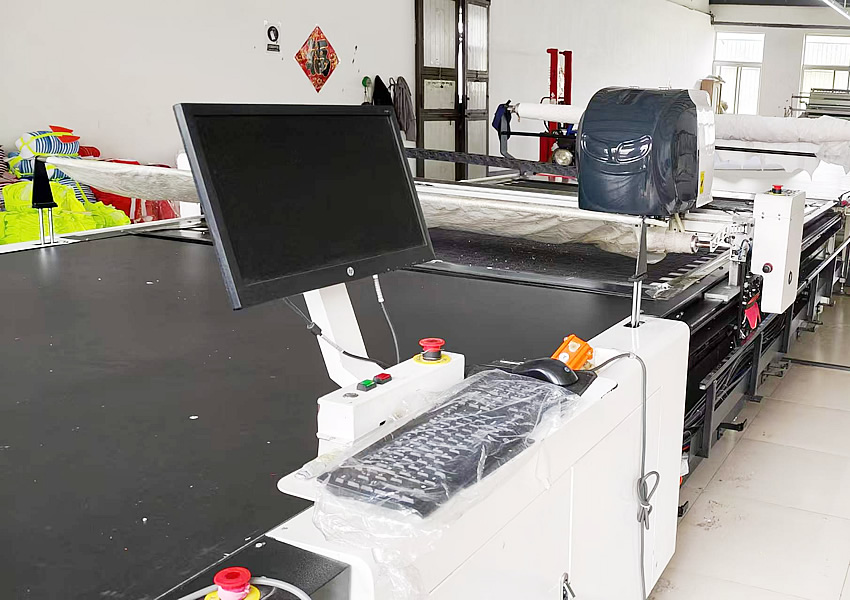
Automated cutting equipment can support consistent production, but equipment alone does not guarantee high yield. The pattern layout, fabric preparation, and operator controls remain important.
Ask whether the factory can compare layouts for the confirmed size mix and fabric width. The most useful comparison uses the same quality standards and production quantity.
Review the design before bulk production
Small adjustments to panel shapes, seam allowances, or brim dimensions may improve yield. Any proposed change should be reviewed against fit, appearance, durability, and the approved sample.
For printed fabrics, consider whether every piece needs exact alignment. Relaxing a nonessential matching requirement may reduce consumption while preserving the appearance customers expect.
Standard fabric colors and commonly available widths can also simplify sourcing. The benefit depends on the order, so request revised pricing before changing a design.
Plan quantities and materials together
Where appropriate, combining compatible sizes or repeat orders may improve fabric utilization. Confirm that production timing, color consistency, and storage arrangements still meet your needs.
For recurring styles, ask whether usable leftover fabric can be reserved for a later run. Agree on ownership, storage conditions, and any handling charges in advance.
Not every remnant can be reused. Color variation between batches, fabric aging, small remnant size, and customer specifications may make reuse impractical for future orders.
Control fabric and cutting quality
Fabric inspection before cutting helps identify width variation and defects that could affect yield. The supplier can then adjust the layout or discuss replacement material before production begins.
Clear cutting instructions and checks on spread layers can reduce mistakes. Track recuts separately from planned layout waste to identify whether the main issue is design or execution.
Do not remove every allowance simply to lower a quote. A realistic allowance for defects and production variation can protect delivery schedules and prevent avoidable shortages.
When Is Paying More for Lower Waste Worthwhile?
Improving yield can require pattern engineering, layout preparation, sampling, or a different fabric purchase. These costs make sense when the expected savings exceed the additional expense.
Suppose an improved layout saves $0.017 per hat on a 10,000-piece order, or about $167 in fabric. A $100 setup charge leaves roughly $67 before other effects.
For a 1,000-piece order under the same assumptions, the fabric saving is only about $17. The same setup charge would not pay for itself on that order alone.
Repeat orders can change the decision if the layout can be reused. Ask whether the setup charge applies once, whether specifications must remain fixed, and who owns the resulting pattern.
A lower-waste option may also be worthwhile when it reduces the risk of fabric shortages or supports a delivery target. Those benefits should be assessed alongside direct material savings.
What Should You Ask a Hat Manufacturer Before Ordering?
Before requesting a final quotation, provide the approved design, estimated quantity, size breakdown, fabric requirements, decoration details, and destination. Incomplete specifications can make waste estimates unreliable.
Ask the manufacturer to explain how it calculates fabric consumption, what usable width it assumes, and whether the estimate includes defects, recuts, or minimum fabric purchases.
Request confirmation that the quoted construction matches the sample. If a lower price depends on changing fabric, pattern placement, or matching standards, review those changes before approval.
Discuss how leftover material and unexpected shortages will be handled. Clear terms help both parties understand when additional fabric costs could arise and who would approve them.
Shijiazhuang Jinling Times Import and Export Trade Co., Ltd. offers custom hat production, including baseball caps and bucket hats, with automated cutting equipment and quality control throughout production.
Buyers considering an OEM or ODM order can share their specifications and ask the company to assess fabric consumption, cutting options, and the implications for their quotation.
Conclusion
Hat fabric cutting waste cost depends on how efficiently usable material becomes approved components, as well as the price and purchasing terms of the fabric itself.
Buyers can make better decisions by comparing yield assumptions, checking fabric width and design constraints, and weighing any setup cost against savings at their actual order volume.
The strongest production choice balances material efficiency with the required fit, appearance, quality, and delivery schedule. A clear discussion before bulk cutting makes that balance easier to achieve.
Hot News

Deeply rooted in textile foreign trade for 28 years, JINLING SHIDAI continues to strengthen the core competitiveness of its source factories
Recently, Shijiazhuang Jinling Times Import and Export Trade Co., Ltd. has continued to advance its upgrades in production standardization process refinement. Since the establishment of the factory in 1997
Read Article →Fully guarantee the delivery of foreign trade orders, and efficiently and steadily advance the peak season production capacity of Jinling Times.
Entering the peak season for foreign trade shipments this year, the production workshops of Jinling Times are operating at full capacity in an orderly manner, production schedules for various
Read Article →

{item.title}
{item.description}
Need Custom Caps?
Send us your artwork and quantity — a detailed quotation within 24 hours.