


How Can Buyers Find Low-MOQ Custom Knitwear Suppliers?
To find low-MOQ custom knitwear suppliers, look for manufacturers whose yarn sourcing, knitting equipment, and decoration options suit your order. An advertised minimum means little until you know whether it applies to the whole order, each style, each color, or each logo design. A small collection can become difficult to produce when those requirements are counted separately.
For knitted hats and scarves, the most practical starting point is often an existing construction made with available yarn, then personalized through a label, patch, embroidery, or a manageable knitted design. If you are sourcing custom promotional hats in bulk, this approach can keep an initial order manageable while giving you a product that represents your brand clearly.
Define the product before searching for suppliers
“Custom knitwear” covers very different production needs. A standard ribbed beanie with a sewn label requires different work from a fully developed hat with custom yarn, a new silhouette, and a multicolor knitted logo. Suppliers may accept small quantities for one and require a larger commitment for the other.
Decide which features must be unique and which can come from the supplier’s existing range. For an event giveaway, a comfortable fit and readable logo may matter more than an exclusive stitch pattern. A retail hat and scarf set may need closer attention to hand feel, coordinated colors, packaging, and consistent dimensions.
Prepare a short specification that includes:
- The product type, intended use, and reference images.
- The preferred fiber composition, feel, and finished dimensions.
- The total quantity and proposed split by style and color.
- The logo artwork, placement, approximate size, and decoration preference.
- The delivery destination, required arrival date, and packaging needs.
If you have no firm material preference, describe the desired result: a lightweight indoor beanie, a warm winter hat, or a soft scarf worn against the neck. That gives the supplier something useful to recommend against without forcing an unsuitable yarn choice too early.
Search where the relevant production capability is visible
Use product-specific searches such as “low minimum custom knitted beanie manufacturer” or “small order knitted scarf supplier.” Broader searches for promotional hats can also find suitable partners, but their ranges may focus mainly on sewn baseball caps or decorated stock products.
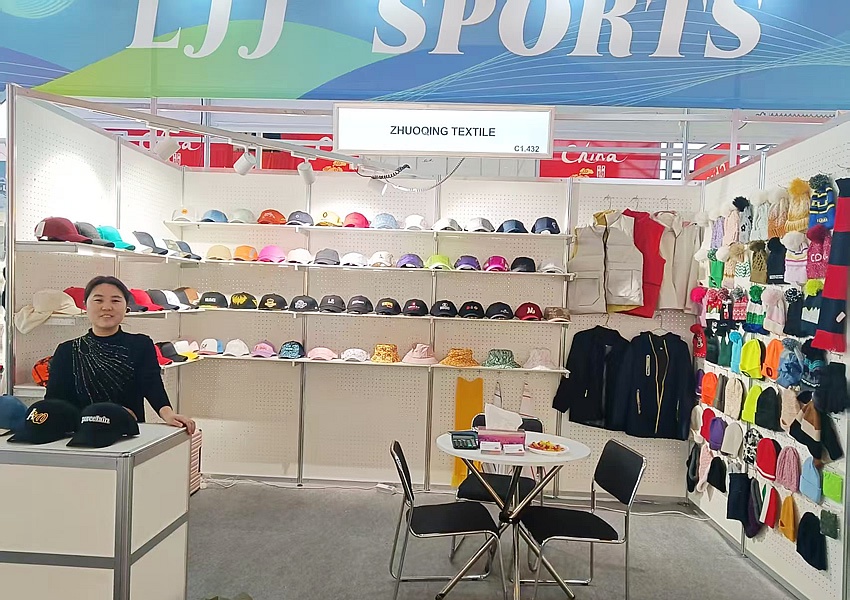
Manufacturer websites, sourcing platforms, exhibition directories, and referrals can all produce useful leads. On each profile, look for evidence of the actual product you need: close views of knitted fabric, examples of different constructions, decoration details, and a clear explanation of sampling and production.
A supplier offering many unrelated products is not automatically unsuitable. However, ask who handles knitting, decoration, inspection, and packing. A trading partner may coordinate specialist workshops effectively, while a manufacturer may outsource selected processes. What matters is whether the company controls the specification, communicates changes, and takes responsibility for the finished order.
Build a shortlist around relevant capability and clear responses. A supplier that explains why a design needs adjustment is often more useful than one that accepts every requirement without discussing production constraints.
Find out what the minimum order actually covers
Ask for minimum quantities at several levels: total order, style, yarn color, and decoration design. Also ask whether different products can share a yarn purchase. A matching hat and scarf may use the same yarn, but their knitting and finishing requirements can still create separate production minimums.
The following distinctions help explain why two apparently similar quotations can differ:
A low finished-product minimum can still leave you paying for surplus yarn, labels, or packaging. Ask for those commitments to appear in the quotation so you can judge the full cost of starting the order.
Reduce complexity without weakening the product
When the proposed minimum is too high, identify the process creating it. Increasing the quantity is only one possible response. Choosing an available yarn, reducing color variations, or using an established hat shape may make the order easier to produce.
Decoration deserves particular attention because each method interacts differently with a stretch fabric.
Knitted designs need artwork that suits the stitch structure
A jacquard logo becomes part of the fabric. It can create a coordinated appearance across hats and scarves, but fine lettering and detailed artwork may lose definition because stitches form a visible grid. Ask for a knitting chart or sample showing how the artwork will translate. Also check the inside surface for loose floats that could catch during use.
Embroidery and patches need support on stretchy fabric
Embroidery can work well on a stable cuff, but dense stitching may stiffen the area or cause puckering. A patch can hold detailed branding more clearly, although its size, backing, and attachment affect flexibility and comfort. Review the decoration while the hat is stretched as well as when it lies flat.
A sewn woven label is another practical option when understated branding suits the product. It still needs a suitable attachment position and a finish that will not irritate the wearer. For a first order, compare the finished appearance of these options before committing to a more complex knitted design.
Use sampling to answer specific questions
A sample is valuable when you know what it is meant to prove. An existing sample can show the supplier’s workmanship and general fabric quality. A development sample can establish fit and construction. A pre-production sample made to the agreed specification provides the reference for the bulk order.
Ask which materials and processes each sample represents. If the sample uses a substitute yarn or temporary label, record the difference. Otherwise, an attractive sample may create expectations that the approved production specification does not support.
For knitted hats and scarves, assess the following:
- Fit and recovery: Does the hat feel comfortable, and does it return toward its original shape after normal stretching?
- Fabric consistency: Are stitches even, with no obvious holes, dropped stitches, or unintended variation?
- Finishing: Are crown seams, scarf edges, labels, and loose yarn ends neatly finished?
- Decoration: Is the logo clear, correctly positioned, and securely attached?
- Care performance: After following the proposed care instructions, are changes in size, shape, surface, and color acceptable?
Fiber composition alone does not establish quality. Two acrylic beanies can feel different because of yarn quality, stitch density, construction, and finishing. Wool-containing products also vary in softness and care needs. Compare the actual fabric with the intended use instead of treating a fiber name as a complete specification.
Agree how finished dimensions will be measured, particularly whether the product is relaxed or stretched. Keep an approved sample and a written specification so inspection has a consistent reference.
Compare the cost of a usable order
The lowest unit price may exclude development, decoration setup, labels, export packing, or delivery. Request quotations against the same specification and ask suppliers to identify separate charges clearly.
Your comparison should include the product cost, sampling and setup, packaging, transport, and the import costs associated with the agreed shipping terms. Clarify who arranges customs clearance and which expenses fall to you. A freight quotation without this context is difficult to compare fairly.
Also consider how much inventory you can realistically use. A larger order can reduce unit cost while increasing the cash tied up in unsold colors or an untested design. If a supplier offers a better price at a higher quantity, compare the additional total spend with the likely demand for those extra pieces.
Ask how repeat orders are priced and handled. Setup work may be reusable, but yarn availability, small replenishment quantities, and revised artwork can affect later costs. A low-cost first order has limited value if the product is difficult to reorder consistently.
Check production control and delivery together
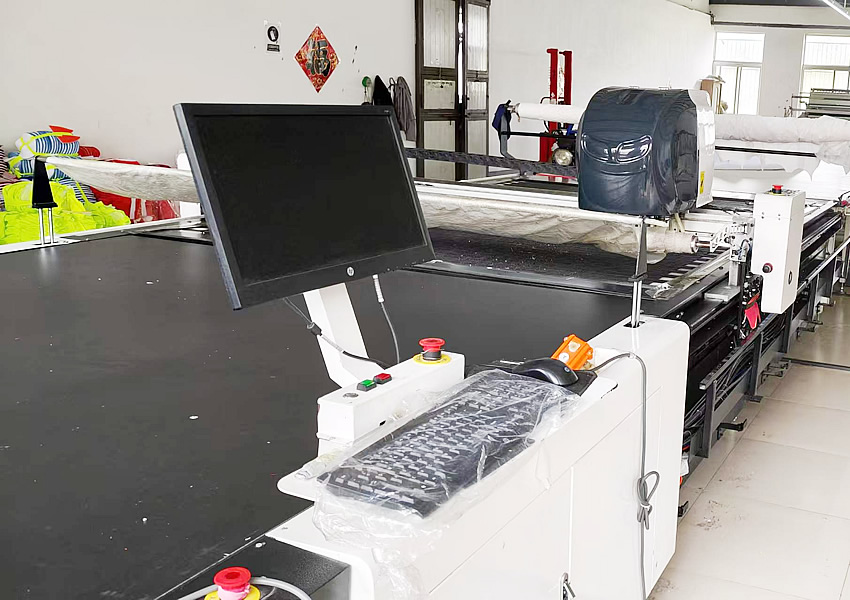
Workshop photographs show facilities, but they do not explain how your order will be managed. Ask which equipment is used for knitting and how the supplier checks work during production. Cutting and sewing capacity alone does not establish the ability to produce a fully knitted hat or scarf.
Useful quality checks include yarn identification, stitch consistency, dimensions, seams, decoration placement, and packing accuracy. Agree which defects require correction and how problems found before shipment will be handled. For a small run, the inspection arrangement should be proportionate to the order value and consequences of a failure.
Delivery timing should start from clear conditions. Yarn availability, artwork approval, sample approval, production, inspection, and transport all affect the arrival date. Ask what must be completed before the production schedule is confirmed and whether the quoted lead time includes decoration and packing.
Product claims and documentation should also match the intended market and use. If recycled content, a particular fiber composition, or a specific performance claim matters to the purchase, make the supporting documentation part of the specification and quotation.
Choose a partner whose strengths match the order
Shijiazhuang Jinling Times Import and Export Trade Co., Ltd. offers knitted hats and scarves alongside baseball caps, bucket hats, and sports hats. Its stated capabilities include small-order customization, OEM/ODM services, an independent production factory, and coordination from raw material procurement through inspection and export logistics.
Those capabilities make it relevant to a shortlist for branded headwear, especially when a collection includes several hat types. The practical discussion should still focus on the proposed knitted product: available yarns, construction options, decoration, sampling, minimum quantities, and delivery. These details establish whether its production arrangement fits your particular order.
Send each shortlisted supplier the same brief and request a recommended specification alongside the quotation. Ask them to explain any changes needed to support a smaller run. A useful proposal will connect those changes to cost, appearance, comfort, or delivery.
Proceed when the sample meets your needs, the minimum quantities are clear, and the written order captures the agreed materials, dimensions, decoration, inspection, and shipping terms. That gives a small initial run a practical purpose: proving the product and the supplier relationship before you commit to a broader range.
Hot News

Deeply rooted in textile foreign trade for 28 years, JINLING SHIDAI continues to strengthen the core competitiveness of its source factories
Recently, Shijiazhuang Jinling Times Import and Export Trade Co., Ltd. has continued to advance its upgrades in production standardization process refinement. Since the establishment of the factory in 1997
Read Article →Fully guarantee the delivery of foreign trade orders, and efficiently and steadily advance the peak season production capacity of Jinling Times.
Entering the peak season for foreign trade shipments this year, the production workshops of Jinling Times are operating at full capacity in an orderly manner, production schedules for various
Read Article →

{item.title}
{item.description}
Need Custom Caps?
Send us your artwork and quantity — a detailed quotation within 24 hours.