


Can Custom Scarves Be Made With Woven Labels?
Yes. Custom scarves can be made with woven labels, and the combination is widely used when a scarf needs to look like a finished retail product rather than a generic promotional item. A woven label can carry a brand name, logo, size, care instruction, origin detail, or limited-edition message while remaining more durable and refined than a printed tag in many scarf applications.
However, a woven label is not simply added at the end of production. Its material, size, fold style, position, and attachment method need to match the scarf construction. A label that works well on a medium-weight knitted scarf may feel bulky, scratchy, or visually out of place on a lightweight fashion scarf. The best result comes from planning the label together with the yarn, knit structure, finishing process, and intended use.
What a woven label adds to a custom scarf
A woven label is made by weaving text and artwork into the label fabric with yarn. Unlike an ordinary printed label, the design is part of the construction rather than a surface layer. This gives it a textured appearance and helps small brand details remain legible after repeated handling, washing, folding, and shipping.
For custom scarves with woven label details, the label often serves two jobs at once. It identifies the product and also signals its quality level. On a knitted scarf, a neatly sewn label can create a stronger impression of a private-label collection. On a corporate or event scarf, it can make the item feel intentional and reusable instead of disposable.
That said, woven labels are not automatically the right branding method for every design. A scarf with a large jacquard logo, for example, already has branding built into the fabric. Adding a prominent woven label may make the design feel crowded. In that case, a small hem label or a discreet care label is usually the better choice.
The scarf material determines how the label should be handled
Scarves are not all built the same way. Knitted scarves, woven fashion scarves, fleece scarves, and performance-style neck warmers each react differently to sewing, label weight, and edge pressure. Choosing the label before considering the base fabric is one of the most common avoidable mistakes.
For knitted scarves, softness matters more than it does for many other accessories. A scarf sits close to the neck and face, so a coarse label edge is quickly noticed. A label can be technically strong and still be a poor choice if it feels irritating against the skin. This is why a soft woven construction, clean-cut edge treatment, and thoughtful placement usually matter more than making the label as thick or as large as possible.
Choose the label construction before finalizing the artwork
Brand artwork often looks different once it is converted into woven yarns. Fine lines, very small lettering, gradients, and complex photographic effects do not always translate well. Woven labels are strongest when the artwork is simplified into clear shapes, readable lettering, and a controlled number of colors.
Damask woven labels are commonly selected for apparel and scarf branding because they can create a relatively smooth surface and support more detailed text than coarser label constructions. A simpler woven label may be enough for a bold logo or short brand name. The practical decision should be based on what must remain readable at the label’s real finished size, not on how the logo appears on a large screen.
Before approving production, review the logo with these questions in mind:
- Will the smallest letters still be readable after weaving?
- Do thin outlines need to be removed or made thicker?
- Are color changes necessary to improve contrast?
- Does the label need a background color, or can the logo sit directly on the base weave?
- Will a folded edge cover any part of the artwork or text?
A care label needs a different design approach from a brand label. Care information requires legibility, while a logo label benefits from visual balance. Combining both on one small woven label can work for a simple scarf, but it may force the text too small. For a retail product, separating the visible brand label from the care and content information often gives a cleaner result.
Label placement affects comfort, appearance, and product use
There is no single “correct” place for a scarf label. The right location depends on how the scarf is worn and how much visibility the brand needs.
A label sewn near one end is common on knitted scarves because it can be seen when the scarf hangs loose or is folded on display. This placement is useful for a logo label, especially when it is aligned with the knit direction and placed above the fringe. It should not be positioned where it repeatedly rubs the neck.
A side-seam label is more discreet. It works well for fashion-oriented scarves, scarves with an all-over pattern, or products where the brand should be present without becoming a visual feature. A loop label inserted into a seam can also be useful, but it needs enough length to be visible and enough softness to avoid catching or curling.
For a double-layer knit scarf, an internal label can be concealed between layers or sewn into an edge finish. This can protect the label and keep the exterior clean, although the construction needs to be planned before assembly. Adding a label after a double-layer scarf has been closed may require visible stitching or a less elegant attachment method.
Placement should also account for fringe, tassels, and decorative borders. A label placed too close to a fringe can twist, become hidden, or make the scarf end feel uneven. On reversible scarves, a highly visible label on one side may undermine the reversible effect. A subtle side label or removable hangtag may be more appropriate in that situation.
Attachment quality matters as much as the label itself
A well-designed woven label can still look poor if it is sewn with the wrong thread color, stitch density, or alignment. Uneven stitching, puckering around the label, loose thread ends, and labels that curl after washing are common quality issues. These problems are more noticeable on scarves because the fabric is often flexible, textured, or visually simple.
The sewing method should support the scarf without restricting its natural stretch. On a knit scarf, stitching too tightly can gather the knit around the label. Stitching too close to the label edge can cause fraying or make the corners lift. A supplier should select an attachment approach that matches the label style: a center-fold label is normally secured at its two ends, while a flat label may be stitched around selected edges or fully sewn down depending on the intended look.
Thread selection also deserves attention. Matching thread can make the label feel integrated into the scarf. Contrasting thread can become a deliberate design detail, but only when it supports the overall identity. It should not be an accidental result of limited production preparation.
When woven labels are the right choice, and when they are not
Woven labels are especially suitable when the scarf will be sold under a brand, included in a uniform program, distributed as merchandise, or supplied as part of a long-term private-label range. They give the product a stable identity without requiring the entire scarf to carry a large logo. They are also useful when the scarf design may change seasonally but the core brand identity remains the same.
They are less suitable when the scarf is extremely lightweight, intended to be worn directly against sensitive skin, or designed around a clean, label-free appearance. A printed neck mark, a small woven edge tab, a removable hangtag, or branding incorporated into the scarf itself may be a better fit. The goal is not to add a label because it is available; it is to choose the branding method that preserves the product’s comfort and design.
For short-run promotional work, a woven label can also be inefficient if the branding is temporary, the artwork changes frequently, or the production quantity does not justify dedicated label development. A simpler solution may be more practical. For an ongoing collection or repeat order, the upfront work of refining the label can pay off through more consistent presentation across future scarf designs.
Build the label into the sampling process
The most reliable way to order a custom scarf is to sample the scarf and woven label together. Approving a label separately is useful, but it does not show how the finished combination will feel, drape, or look at a normal viewing distance.
A complete sample review should include the scarf’s yarn and color, knit density or woven structure, label material, final label dimensions, fold type, sewing position, and packaging method. It should also check whether the label remains straight after finishing and whether the scarf keeps its intended shape once folded for packing.
For a branded retail scarf, it is useful to inspect the product in three ways: laid flat, worn around the neck, and folded as it will appear in packaging. A label may look centered on a production table but disappear under a fold or sit at an awkward angle when worn. These small details influence how polished the item feels in use.
Information to prepare before asking for a quotation
Clear specifications reduce delays and make it easier to compare suppliers on a like-for-like basis. It is better to start with a practical brief than with only a logo file and a request for “custom scarves with woven label.”
- Scarf material, such as acrylic, wool blend, cotton blend, polyester, fleece, or another required composition.
- Scarf construction: knit, woven, brushed, ribbed, jacquard, double-layer, or another finish.
- Finished dimensions, including fringe or tassel requirements where applicable.
- Brand artwork in a clean, scalable file format.
- Label size, colors, fold style, and intended placement.
- Whether the label needs logo information only or also content, care, and origin information.
- Packaging expectations, including folding, individual bags, paper bands, hangtags, or retail presentation.
- Required order timing and whether the design may be reordered later.
It is also useful to identify which elements cannot change and which can be adjusted. For example, a brand may need a particular logo color but be flexible about label fold style. Another buyer may need an exact scarf length but be open to a simpler label construction. This helps the manufacturer solve the right problem instead of making unnecessary compromises in the wrong area.
A production partner should be able to manage the full connection between scarf and label
Custom scarf projects become easier to control when raw material selection, knitting or sewing, label attachment, inspection, and packing are managed as connected stages. The label cannot be treated as an afterthought if its placement depends on scarf construction or if its appearance must remain consistent across repeat orders.
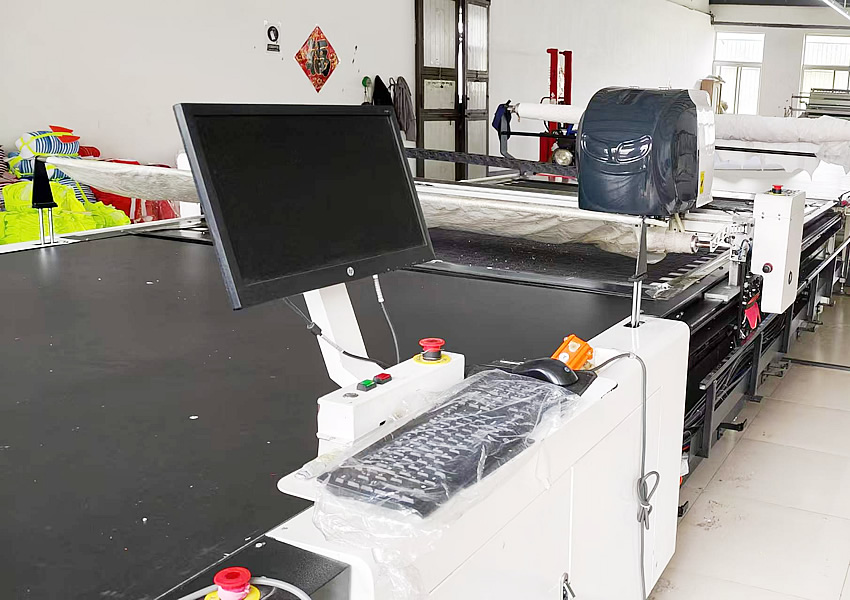
Shijiazhuang Jinling Times Import and Export Trade Co., Ltd. produces customized knitted scarves alongside its headwear range and supports both smaller custom requirements and larger OEM/ODM programs. Its production setup includes knitting-related manufacturing, automated cutting and sewing equipment, finishing, packing, and process-based quality control. For buyers shipping across different markets, this type of integrated workflow can be useful when the scarf, woven label, packaging, and export handling need to be coordinated rather than sourced as disconnected parts.
The final decision should come back to the product itself: the label must be legible, secure, comfortable, and visually appropriate for the scarf. When those four points are resolved during sampling, a woven label can turn a standard custom scarf into a product that is easier to recognize, present, and reorder.
Hot News

Deeply rooted in textile foreign trade for 28 years, JINLING SHIDAI continues to strengthen the core competitiveness of its source factories
Recently, Shijiazhuang Jinling Times Import and Export Trade Co., Ltd. has continued to advance its upgrades in production standardization process refinement. Since the establishment of the factory in 1997
Read Article →Fully guarantee the delivery of foreign trade orders, and efficiently and steadily advance the peak season production capacity of Jinling Times.
Entering the peak season for foreign trade shipments this year, the production workshops of Jinling Times are operating at full capacity in an orderly manner, production schedules for various
Read Article →
Need Custom Caps?
Send us your artwork and quantity — a detailed quotation within 24 hours.